Here is a number that should change how you plan your week. On a typical day, gold covers somewhere between $25 and $45 of range. Roughly half of that movement happens inside a four-hour window in the afternoon, UK time. The other twenty hours of the trading day share what's left, and a good chunk of them produce almost nothing at all except spread costs and boredom.
Most losing gold traders I've met weren't wrong about direction. They were wrong about time. They took perfectly reasonable setups at 4am when the market had no intention of going anywhere, paid a wide spread for the privilege, got stopped out by noise, and then watched the real move happen at 3pm while they were licking their wounds. The best time to trade gold isn't a secret, and it isn't folklore either. It shows up in the range data year after year, session after session, and once you've seen the map you can't unsee it.
So that's what this piece is: an hour-by-hour map of the gold day. When the market actually moves, when spreads quietly rob you, why the London-New York overlap earns its reputation, and exactly what to do on NFP, CPI and FOMC days (mostly: nothing, and I'll defend that). All times below are London time unless I say otherwise, because gold's rhythm is easiest to read from a UK clock.
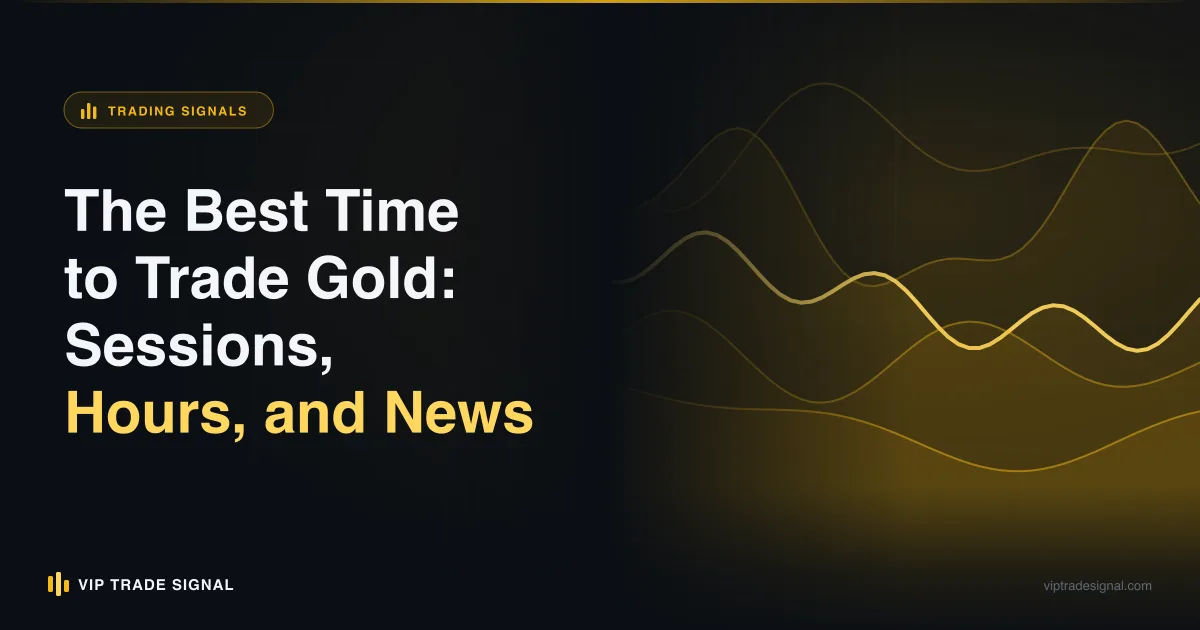
Gold's 24-hour day: an hour-by-hour volatility map
Gold trades nearly around the clock, from Sunday evening to Friday evening, with a short daily pause around 10pm-11pm London time when the futures market resets. That near-continuous access is a trap for beginners, because "the market is open" and "the market is worth trading" are two very different statements.
If you take average hourly ranges on XAU/USD over any recent stretch of months, the same shape appears every time. A long, flat plateau overnight. A modest bump around the London open. Then a steep climb into the early New York hours, a peak somewhere between 2pm and 4pm, and a long slide into the evening that ends in the dead zone before rollover.
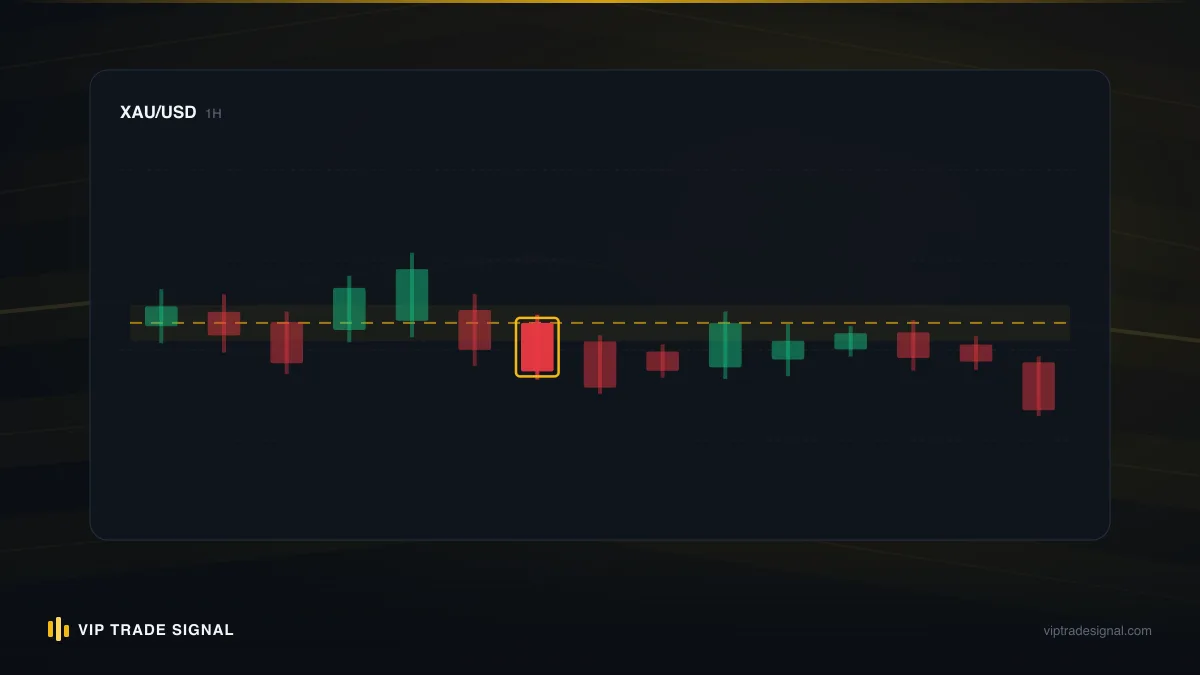
Put rough numbers on it. In a market where the full daily range is around $30, a typical Asian-session hour might cover $3 to $5. The hour after the London open might do $6 to $9. The hours around the US data window and the New York morning routinely cover $10 to $15 each, sometimes far more when there's a catalyst. And the hours after 8pm often manage $2 to $3, which after spread is barely a market at all.
Those exact dollar figures drift with the volatility regime. When gold is trending hard and the daily range balloons to $60 or $80, every hour scales up. When it's stuck in a summer chop, everything shrinks. But the shape of the day, the relative sizes of the hours, is remarkably stable. The afternoon peak is always the peak. The overnight plateau is always the plateau. You are not going to be the trader for whom 3am London time turns into the prime window.
Why is the day shaped like this? Because gold, whatever the goldbugs tell you, trades like a dollar asset. Its biggest single driver on any ordinary day is the US macro picture: real yields, the dollar index, Fed expectations. All of that gets repriced when American data lands and American desks are at their machines. Physical demand from Asia sets a floor and a tone; London provides the plumbing; but the marginal price of gold, hour to hour, gets decided in the window when the US is awake. Once you see the volatility map as a map of when dollar-moving information arrives, it stops being a curiosity and starts being obvious.
One honest caveat before we walk through the sessions: this is a map of averages, and averages contain violence. A central bank surprise at 6am can make a mockery of everything I've just written, once or twice a year. The map tells you where movement usually lives. It doesn't promise the market will behave, and nothing in gold ever does. This stuff is high risk on any clock.
The Asian session: range trading and traps
The Asian session, roughly midnight to 7am London time, is when Sydney, Tokyo, Singapore and Shanghai are active. There is genuine physical gold demand in Asia, and Shanghai's gold market has real weight these days, so it's not a dead session. But for a spot trader watching XAU/USD, most Asian sessions look the same: a drift into a range of maybe $8 to $15, often centred near the previous New York close, with liquidity thin enough that individual orders leave visible dents.
Two things happen in this window that matter for the rest of your day.
First, the Asian range gets built. That overnight high and low become reference levels that London and New York traders lean on. A break of the Asian high after 8am means something. The same break at 3am usually means nothing, which brings us to the second thing.
Second, the traps get set. Thin liquidity plus resting stops above and below a narrow range is an invitation. You'll regularly see gold poke $3 or $4 above the Asian high in the small hours, trigger a cluster of breakout entries and stop-losses, and then fold straight back into the range. Traders call these runs on liquidity, sweeps, stop hunts, whatever. The label matters less than the pattern: overnight breakouts in gold fail far more often than they follow through, because there's no session behind them to carry the move.
Can you trade the Asian session? Some people do, mean-reverting inside the range, selling the top of it and buying the bottom with tight expectations. It's a legitimate style. It's also a grind: small targets, spread taking a fat percentage of every winner, and the ever-present risk that the one breakout which doesn't fail happens while you're positioned against it. Say you're short from the top of a $10 Asian range, playing for $6, and Tokyo suddenly gets a headline about US tariffs. Your $6 target becomes a $25 loss before your alarm clock has an opinion.
My honest take: unless Asia is your daytime and you've specifically built a range system with the stats to back it, the Asian session is for sleeping and for marking levels, not for trading. The market will still be there at 8am.
London open: the first real move
Somewhere between 7am and 9am, gold wakes up. London is still the centre of the over-the-counter gold market, the big bullion desks are here, and when they come in, volume arrives with them. The 8am hour is usually the first hour of the day where the candle looks like it was drawn with intent.
The classic London-open behaviour is a decisive test of the Asian range. Either gold breaks one side of it and starts trending, or it fakes through one side, reverses, and runs the other way. That second pattern, the morning fake-out, is so common it has its own folklore, and for once the folklore is roughly right. The first move out of the London open is wrong often enough that experienced traders treat it with suspicion until about 9am.
What London gives you that Asia doesn't is follow-through. When a move starts at 8:30 with real volume behind it, it can carry $10 or $15 before lunchtime. Spreads tighten sharply too, because liquidity is deep, so the cost of doing business drops just as the opportunity improves. That combination, better movement and cheaper execution at the same time, is the whole argument for trading session hours and it never stops being true.
There's also a scheduled event worth knowing: the LBMA gold auction processes around 10:30am (and again at 3pm), which sets the benchmark price used by miners, refiners and central banks. It's not a news release and it won't usually spike the chart, but flows around the fix can cause odd little surges of activity mid-morning that have nothing to do with your technical levels. If gold lurches $5 at 10:28 for no visible reason, you've probably just watched fixing flows go through.
Then comes the lull. From roughly 11am to 1pm, London goes to lunch and New York hasn't arrived. Gold frequently spends these two hours retracing a chunk of the morning move or flagging sideways. It's a reasonable window for planning and a poor one for initiating. The market is holding its breath for the main event.
The London-New York overlap: the prime window
If you only get four hours a day at the screen, make it these: roughly 1pm to 5pm London time, when both London and New York are fully active. This is the famous London New York session overlap, and gold volatility during it is not folklore, it's the most reliable feature of the entire map. COMEX futures are in full swing, US economic data lands at 1:30pm, the London afternoon fix goes through at 3pm, and every institutional desk that matters is staffed on both sides of the Atlantic.
Gold gives you one honest window a day. It runs from lunch to teatime, London time, and everything else is an audition.
The numbers back the reputation. On an ordinary day, the overlap delivers 40-60% of the entire daily range. On data days it can deliver 80% of it in the first thirty minutes. The moves that start here have follow-through because there's depth behind them; a breakout at 2:30pm with volume is a fundamentally different animal from the same shape at 2:30am. And spreads are at their tightest of the whole day, often 15 to 25 cents on a decent broker's standard account, which means your fixed cost per trade is at its minimum precisely when the potential per trade is at its maximum.
The 1:30pm data slot deserves its own respect even on days without a headline release. Weekly jobless claims, retail sales, PPI, trade balance: second-tier numbers still routinely move gold $5 to $10 in a few minutes. Check the calendar before the overlap, every single day. Trading through a release you didn't know existed is an unforced error, and it's the most common unforced error there is.
Within the overlap, the texture shifts. The 1:30pm to 3pm stretch is the wildest, driven by data reactions and the initial New York positioning. The 3pm to 5pm stretch tends to be the trend-continuation zone, where the day's direction, once picked, gets extended in a cleaner, more orderly way. If you're a breakout or momentum trader, early overlap is your habitat. If you prefer joining an established move on a pullback, mid-afternoon is kinder.
Does the overlap guarantee anything? Of course not. Plenty of overlaps chop viciously and hand disciplined traders two stop-outs before going nowhere. The claim is narrower and more useful: if gold is going to move today, this is when it's overwhelmingly likely to happen, at the lowest cost of participation you'll be offered. That's as good as an edge in timing gets.
Late New York and rollover: the danger hours
After 5pm London, the market exhales. London desks have gone home, New York winds down through its afternoon, and volume thins hour by hour. From 6pm onward, gold typically drifts on declining participation, and moves that do happen have a strange, unaccountable quality, position-squaring and stop-clearing rather than fresh conviction.
Then comes the hour every gold trader learns about the painful way: rollover. Around 10pm London time (5pm New York), the futures session ends and reopens, and for a window of a few minutes to an hour, liquidity on spot gold all but evaporates. Spreads that were 20 cents in the afternoon can flare to $1.50, $3, sometimes worse on lower-tier brokers. The chart prints ugly little spikes that exist for nobody except the traders whose stops they clip.
This is where "my stop was hit but price never really went there" stories come from. If your stop-loss sits $1 beyond a level and the spread briefly widens to $3, you can be taken out by the quote alone, without a single meaningful trade printing at your price. It isn't (usually) your broker cheating. It's you leaving a resting order in a market that momentarily stopped existing.
Three rules for the danger hours, and I'd treat them as close to absolute:
- Don't open new positions between 9:30pm and 11:30pm London time. Nothing your strategy sees in that window is worth the execution risk.
- If you hold overnight, give stops room for the rollover flare, or accept that a tight stop may be executed on spread alone. Size the position so either outcome is survivable.
- Never leave a market order, or a barely-out-of-the-money pending order, sitting over rollover. Widened quotes will find it.
Sunday's open deserves the same caution squared. Gold reopens Sunday evening with the thinnest book of the week, and any weekend news gets expressed as a gap or a lurch in near-zero liquidity. Whatever the chart appears to offer on a Sunday night, the offer is worse than it looks.
Spread behavior by hour: what you'll actually pay
Traders obsess over entries and ignore the toll booth. Spread is the one cost you pay on every single trade, win or lose, and on gold it swings by a factor of five to ten across the day. Trading the same setup at 3pm versus 11pm can mean paying five times more for identical risk.
Here's the shape of it on a typical standard account at a reasonable broker. Your broker's exact numbers will differ; the pattern won't.
| London time | Session | Typical XAU/USD spread | Typical hourly range |
|---|---|---|---|
| 00:00-07:00 | Asia | $0.35-$0.60 | $3-$5 |
| 08:00-12:00 | London morning | $0.20-$0.35 | $6-$9 |
| 13:00-17:00 | London-NY overlap | $0.15-$0.25 | $10-$15 |
| 18:00-21:00 | Late New York | $0.30-$0.50 | $2-$4 |
| 22:00-23:00 | Rollover | $1.00-$3.00+ | thin, spiky |
The column that matters is the ratio between them. During the overlap you might pay a 20-cent spread to access a $12 hourly range: cost is under 2% of the opportunity. At 8pm you might pay 40 cents to access a $3 range: now cost is 13% of the opportunity, before you've been right about anything. Same instrument, same broker, same you. The market's hours did that.
Run it through a position. Say you trade 0.10 lots, where a $1 move in gold is worth $10. A 20-cent overlap spread costs you $2 per round trip. A $2.50 rollover spread costs $25, on a trade where you might have been risking $30 in the first place. You'd never knowingly pay an 80% surcharge on your risk, but that's what an off-hours gold trade quietly is.
This is also the fairest lens for judging brokers. Any broker can advertise its best-case overlap spread. The revealing questions are what the spread does at 10pm, on Sunday's open, and in the minute after CPI. If you're comparing brokers anyway, perhaps because you're looking at getting signals free through one, our note on brokers that come with free signals covers what to check beyond the headline number.
News days: NFP, CPI, FOMC protocols
Three releases move gold more than everything else on the calendar combined: US Non-Farm Payrolls (first Friday of the month, 1:30pm London), US CPI (monthly, 1:30pm), and the FOMC rate decision (eight times a year, 7pm, with the press conference at 7:30pm). Trading gold during NFP, CPI and FOMC news is its own discipline, and the honest version of that discipline is mostly about restraint.
Understand what these events do to the market's plumbing, not just its price. In the seconds around the release, liquidity providers pull their quotes. Spreads gap from 20 cents to $2 or $5. Price doesn't travel from A to B; it teleports, skipping every level in between. A $15 move in ninety seconds is routine on NFP, and a $30 whipsaw, hard one way then harder the other as the market digests the details behind the headline, is common enough that you should treat it as the base case.
That whipsaw is what kills people. Traders imagine news trading as a directional bet: hot CPI, gold drops, easy. The first move is frequently reversed within fifteen minutes once the revisions, the core figure, or the internals get read properly. So even a trader who correctly guesses the number and the direction can be stopped out by the initial spike the wrong way, executed with $4 of slippage, and then watch the market go exactly where they said it would. Right on the economics, broke on the execution.
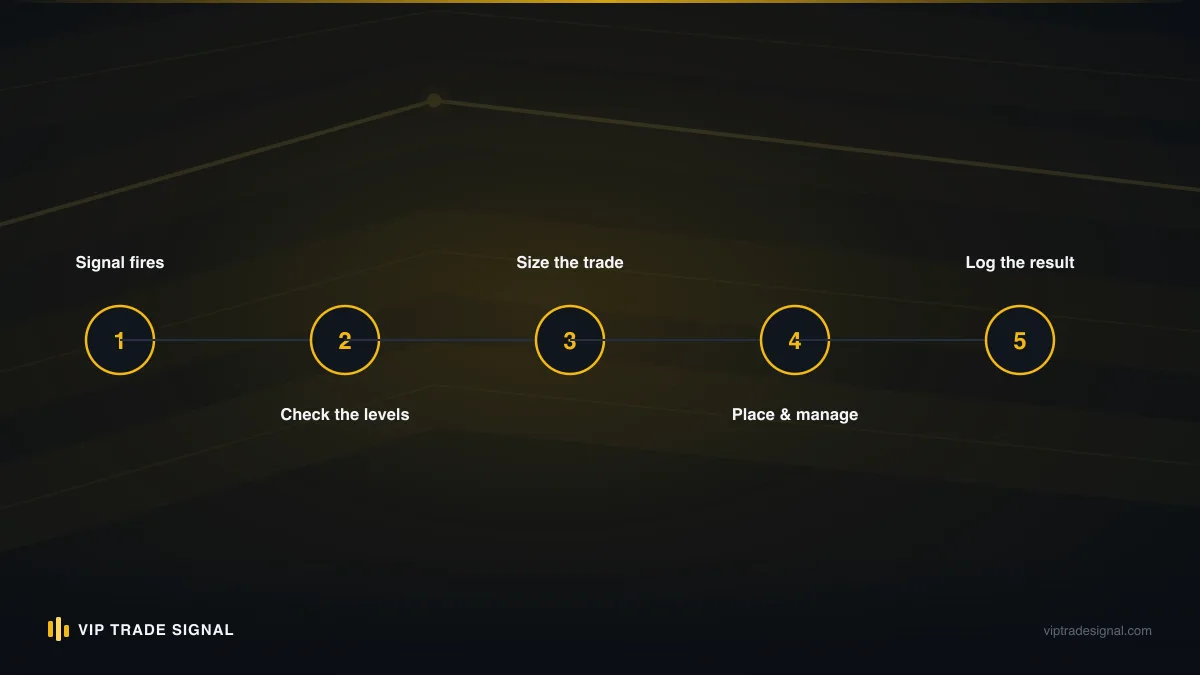
FOMC days have a special structure worth knowing. The statement at 7pm produces move one. The press conference at 7:30pm regularly produces move two, and move two reverses move one often enough that veterans call the first move a trap by default. On FOMC evenings, gold can put in its entire weekly range between 7pm and 9pm, in the London evening when spreads are already past their best. It's spectacular to watch and miserable to trade.
The good news: these dates are published months ahead. There is no excuse, none, for being surprised by NFP. Five minutes with an economic calendar on Sunday tells you which days this week carry event risk. That five minutes is the highest-value research a gold trader does all week.
Pre-news positioning: the flat rule
Our rule on the desk is short enough to fit on a sticky note: flat before the big three, or sized like you mean to survive being wrong twice.
Flat means no open gold position in the final 30 to 60 minutes before NFP or CPI, and from mid-afternoon before an FOMC evening. Not "holding with a tight stop", which is the worst of all worlds, because a tight stop in a teleporting market is just a guaranteed exit at an unknown, worse price. If the event gaps $12 through your stop, you're filled $12 through it, or near enough. Stop-losses are limits on intention, not on physics.
The usual objection: "but what if I'm in a winner and the news extends it?" Sometimes it will, and you'll have banked a smaller profit than the fantasy version. Fine. Run the other branch of that tree honestly. You're up $300 on a long, NFP prints hot, gold drops $18 in a minute, and your $300 winner is now a $500 loser filled with slippage. The expected value of holding decent-sized positions through binary events is negative once you price the gap risk properly, and the emotional damage of watching a banked win turn into a beating is worse than the maths. Take the smaller certain number. Every time.
What about after the release? This is where patience gets paid. Our protocol, and the one I'd suggest for anyone trading these days manually:
- T minus 60 to zero: flat, or a position so small an adverse $30 gap is an annoyance, not an event. No new entries.
- Zero to T plus 15: hands off entirely. Spreads are still wide, the whipsaw is live, and the candles are lies.
- T plus 15 to T plus 60: the market picks its real direction. Spreads normalise. If a clean level forms, this is the window where a post-news trade becomes defensible.
- FOMC only: extend everything. No fresh risk between the statement and at least 15 minutes into the press conference.
Boring? Completely. But the trader who only ever entered fifteen minutes after the dust settled missed every news-spike disaster of the last decade and still caught most of the genuine trends those releases started, because real trends last hours and days, not seconds. You give up the first $10 of the move in exchange for not being the liquidity. That trade is a bargain.
Day-of-week patterns: what the data supports
Hour-of-day effects in gold are strong and durable. Day-of-week effects are real but far weaker, and this is where I want to pull you back from the folklore, because the internet is full of confident nonsense about "never trade gold on Mondays".
What the range data genuinely supports, in broad strokes:
- Monday tends to run below-average range. No US data of consequence, positions being rebuilt after the weekend, and an Asian session that inherits nothing. Not dead, just quieter, and prone to slow drifts that retrace.
- Tuesday through Thursday carry the meat of the week. Most tier-one US data lands in this stretch, FOMC is always a Wednesday, and trends that develop mid-week have the most sessions ahead of them to run.
- Friday is two different days wearing one date. NFP Fridays are the most explosive sessions of the month. Ordinary Fridays often produce a decent London-overlap move and then die after about 4pm as US desks square up for the weekend, sometimes with a counter-trend profit-taking push into the close.
There's a monthly rhythm layered on top of the weekly one, and it's mostly the calendar again. The first week of the month is heavy: NFP on the first Friday, ISM surveys just before it. Mid-month brings CPI, usually in the second week, and retail sales close behind. FOMC weeks bend everything around the Wednesday evening, with markets often going strangely quiet for a day or two beforehand as nobody wants to carry risk into the decision. If your trading month feels like it alternates between famine and flood, it isn't your imagination and it isn't your strategy. It's the release schedule breathing.
That's about as far as honest data takes you. The mistake is upgrading these tendencies into rules. A Monday with a weekend geopolitical headline will out-range a sleepy Thursday by a mile. A "quiet Friday afternoon" in a strongly trending market can keep right on trending. Day-of-week is a tiebreaker, a reason to size slightly smaller on a Monday drift or to stop initiating after Friday lunch, not a system.
If you want one weekly habit out of this section, make it the Sunday calendar review. Ten minutes: mark the NFP, CPI and FOMC slots if they fall this week, note any central bank speakers, and decide in advance which sessions you'll trade and which you'll skip. A week planned on Sunday survives contact with the market far better than a week improvised at 1:29pm on Wednesday. And it takes less time than you'll spend reading one more Twitter thread about whether Mondays are cursed.
The best time to trade gold is one you can actually keep
Here's the part most timing articles skip: you have a job, a family, a time zone, and a body that needs sleep. The perfect window is worthless if you can't be sharp during it. So instead of pretending everyone can sit at a screen from 1pm to 5pm London, let's map real schedules onto the gold day.
You're in the UK or Europe with a day job. Awkward truth: the prime window sits inside your working hours. Your realistic options are the London open (be at the screen 7:45am-9am, trade the Asian-range break or fade the fake-out, done before standup) or the tail of the overlap if you finish at 5pm. Alternatively, stop trying to trade intraday at all and work from daily charts with pending orders placed at levels, reviewed each evening. That's not a downgrade. Plenty of consistent gold traders never watch a live session.
You're in the Americas. You're the lucky one. The overlap is your morning: 8am to noon Eastern covers the entire prime window, data releases included. A US-based trader with two free morning hours has better access to gold's best behaviour than a European with the whole evening free, which feels unfair because it is.
You're in Asia or Australia. Hardest draw. The overlap runs through your late night, roughly 9pm to 1am in Singapore, worse in Sydney. Your local daytime is gold's flattest stretch. Choose deliberately: either become a genuine Asian-range specialist with the small expectations that requires, trade the London open as your evening session, or move up to four-hour and daily timeframes where the clock stops mattering. What doesn't work is trading your afternoon as if it were New York's. The volatility simply isn't there, and the spread-to-range arithmetic from earlier quietly eats you.
You have chaos instead of a schedule. Shift workers, parents of small children, anyone whose free hours move weekly: consider whether live intraday trading fits your life at all right now. Timing edges demand presence at specific hours. If you can't supply that, higher-timeframe trading, or following a service that supplies the timing while you supply only the execution, is the honest fit. This is exactly the situation where signals earn their keep, and equally the situation where a bad signal seller does the most damage, so choose the provider with your eyes open.
How our signal timing follows this map
Since we run a gold signal service, you might reasonably ask whether we practise this. So, briefly and concretely: yes, and you can audit it, because every closed signal we've ever issued sits publicly at /signals/history, timestamps included, wins and losses both.
Look at the clustering. The bulk of our entries land between the London open and the back half of the New York overlap, because that's where the follow-through lives and the spreads are honest. We issue very little in the Asian session beyond the occasional position that's deliberately built at range extremes. And we go completely quiet in two places: the hour around rollover, and the windows before the big three releases. VIP Trade Signal is gold-only and unlimited, so the quiet isn't rationing. It's the same flat rule from earlier, applied to you as well as to us. A signal service that pings your phone at 1:25pm on NFP Friday with a fresh market order isn't giving you extra value; it's handing you gap risk with a confident font.
Subscribers occasionally ask why nothing arrived on some particular Tuesday evening, and the answer is nearly always in this article: the map said the market had gone home. No signal is a signal. It says today's remaining hours don't pay for their risk, and we'd rather send nothing than manufacture activity, an incentive structure worth checking on any provider you evaluate. Whether paid signal timing beats what you'd do alone is a fair question with an honest, mixed answer, and we've written about whether forex signals actually work without the sales gloss.
Costs, since we're being concrete: $99 a month, or free if you trade through one of our partner brokers (Exness, XM, IC Markets, Vantage) with $250 or more maintained there. The mechanics of that route are on the FAQ. None of it changes the physics above: a signal at a good hour is still a trade in a risky market, and losing runs happen to us in public, which is rather the point of the public part.
Your personal trading-hours plan
Enough map-reading. Here's the part you write down. Not mine, yours, because the whole argument of this piece is that timing is personal: gold's schedule is fixed, and the only variable is how your hours intersect it.
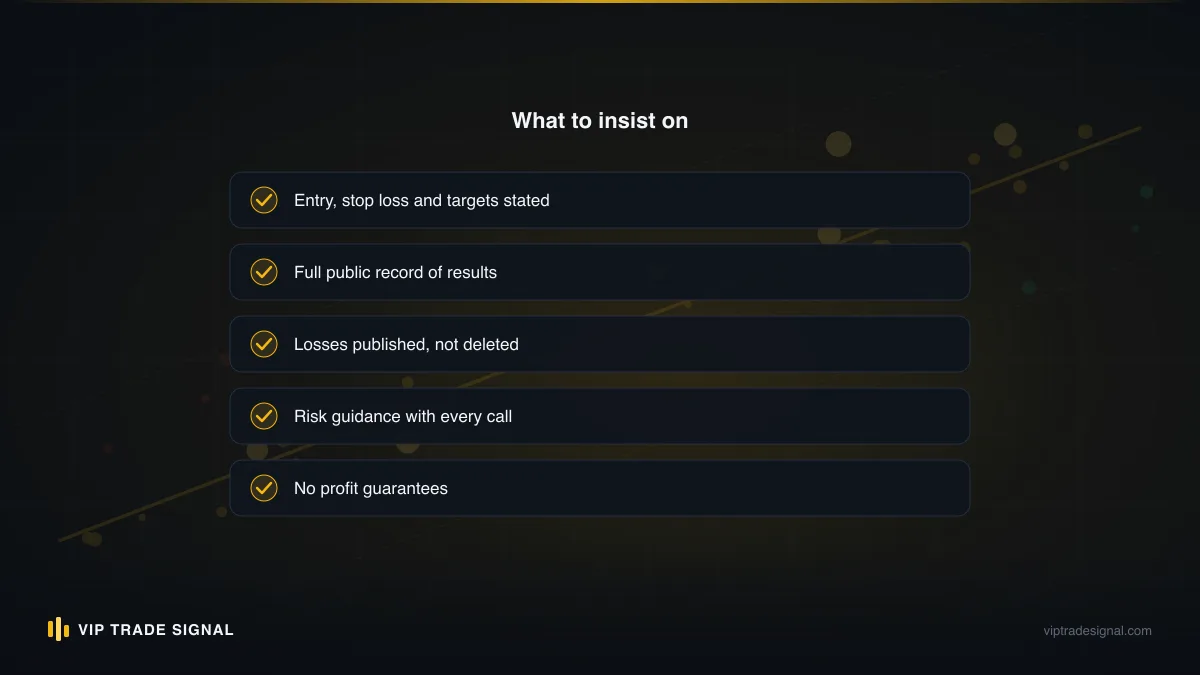
Five decisions, in order:
- Pick your window. One or two blocks, tied to your real life, chosen from the honest parts of the map: London open, any slice of the 1pm-5pm overlap, or a deliberate Asian-range routine if that's your daylight. Write the actual clock times.
- Declare your dead zones. Minimum set: no new positions 9:30pm-11:30pm London, nothing in the last hour before NFP or CPI, nothing from an hour before FOMC until after the presser settles, deep suspicion of Sunday evenings. Add Friday after 4pm if your record there is as bad as most people's.
- Put the calendar in your Sunday. Ten minutes marking the week's releases. Decide then, in cold blood, which days you'll trade and which you'll watch. Decisions made before the adrenaline are the only ones that hold.
- Log the hour on every trade. One extra column in your journal. Within thirty or forty trades you'll have your own volatility map, and I'd wager real money it shows your off-hours trades bleeding and your window trades carrying the account. Mine did, embarrassingly so, when I finally ran the numbers on my own early years.
- Respect the empty hours. The hardest one. Twenty-ish hours a day, gold offers you a bad deal, and the discipline to decline a bad deal is worth more than any entry technique. Away from the screen is a position too. Often the best-paid one.
None of this makes gold safe. Nothing does; it's a leveraged market that hands out losing streaks to good traders on good schedules, and anyone who implies otherwise is selling something you shouldn't buy. But the same trader, with the same strategy and the same risk, gets meaningfully better results inside the right hours than outside them, purely because the market co-operates more and charges less. Trade the map. Sleep through the rest.