There's a moment every retail trader hits, usually after the second or third blown account, when a quiet thought arrives: maybe I should just give my money to someone who knows what they're doing. The brokers know this moment intimately. They've built a whole product around it. It's called a PAMM account, and if you've spent any time on a forex broker's website, you've seen the pitch: browse a leaderboard of managers, pick one with a pretty green equity curve, click invest, and let a professional trade for you while you get on with your life.
It's a genuinely clever piece of financial engineering. It's also one of the most one-sidedly marketed products in retail forex, and that's saying something in an industry where "93% accuracy" Telegram channels are considered normal advertising.
So let's do the thing the affiliate reviews won't. This is a full walk through the PAMM account: what it stands for, how the pooling and allocation maths works, who the three parties are and what each of them actually wants, how the leaderboards are built and why they mislead, what the fees look like, and then, at proper length, the disadvantages. Custody. Anonymity. Lockups. The stuff that only shows up after your money is in the pool. We run an account management desk ourselves, so we're not neutral here, and we'll say plainly where our interest lies. But the mechanics below are just the mechanics. Check them against any broker's PAMM terms and they'll hold.
What is a PAMM account and how does it work
PAMM stands for Percentage Allocation Management Module. Some brokers say Percentage Allocation Money Management. Same thing. The name is the whole idea: your money is allocated a percentage of a shared pot, and everything that happens to the pot happens to you in proportion.
Here's the structure. A trader, called the manager, opens a master account with a broker that offers PAMM. Investors, that's you, deposit money into that master account through the broker's PAMM interface. Your funds and the funds of every other investor merge into one pooled balance. The manager then trades that pooled balance as if it were a single account. One position, one entry, one exit. When the trade closes, the profit or loss is split across every investor automatically, according to each investor's share of the pool.
You never place a trade. You never see the platform the manager uses, at least not in any way you can act on. You pick a manager from a list, you allocate money, and from that point your job is to watch a number go up or down.
Three details matter straight away, because they shape everything else in this article.
First, the pooling is real. This is not copy trading, where trades are mirrored into an account you own. In a PAMM structure your money physically sits in the manager's master account, or in a broker-held structure attached to it. You own a claim on a percentage of a pool. That's a different thing from owning an account, and the difference is the heart of this piece.
Second, the manager usually has their own money in the pool. Brokers call this the manager's capital, and it's the main trust mechanism PAMM offers: the manager supposedly can't hurt you without hurting themselves. We'll come back to how thin that protection actually is, because managers' stakes are often tiny relative to investor money, and a manager risking $500 of their own to trade $200,000 of yours has a very different risk appetite than the brochure implies.
Third, the broker sits in the middle of everything. The broker runs the allocation software, hosts the leaderboard, holds the funds, calculates the fees, and takes the spread and commission on every trade the manager places. Remember that last part. The broker earns from trading volume whether investors win or lose, which explains a great deal about how PAMM is marketed.
That's the honest one-paragraph answer to "what is a PAMM account and how does it work": pooled money, one trader, proportional split, broker in the middle. Now the maths.
The allocation maths, with actual numbers
The percentage allocation part is genuinely elegant, and it's worth working through a real example because the numbers make the risks concrete later.
Say a PAMM pool has three investors and a manager:
| Participant | Deposit | Share of pool |
|---|---|---|
| Manager's own capital | $2,000 | 4% |
| Investor A | $10,000 | 20% |
| Investor B | $30,000 | 60% |
| Investor C | $8,000 | 16% |
| Total pool | $50,000 | 100% |
The manager goes long gold and closes the trade for a $4,000 gross profit, 8% on the pool. Everyone gets 8%. The manager's stake grows by $160, Investor A by $800, Investor B by $2,400, Investor C by $640. Then the performance fee comes off, and we'll get to fees properly in a minute, but suppose it's 30% of profit: Investor A hands back $240 of that $800 and keeps $560.
Losses divide exactly the same way, minus the fee, because performance fees only apply to gains. If that gold trade had lost $4,000 instead, Investor B is down $2,400 and there's no fee to soften it. The symmetry is clean. It's also the first thing to sit with: in a pool, you can't take less risk than the pool takes. Investor C might be a cautious person who'd never risk more than half a percent per trade on their own account. Doesn't matter. If the manager risks 5% of the pool on one position, Investor C is risking 5% of their money on that position too, and there is no button anywhere in the PAMM interface that changes it.
New deposits and withdrawals complicate the picture slightly. Because the pool's composition changes when anyone joins or leaves, brokers process these at fixed intervals called trading periods or rollovers, often weekly or monthly. Deposit mid-period and your money typically waits in a queue until the next rollover before it starts trading. Want out mid-period? Same queue, in reverse. Hold that thought, because "same queue, in reverse" turns out to be one of the biggest practical PAMM account disadvantages, and almost nobody mentions it before you invest.
One more piece of the maths: high-water marks. Most PAMM fee structures include one, meaning the manager only earns performance fees on profit above the previous peak. If the pool grows to $60,000, drops to $52,000, then recovers to $58,000, the manager earns nothing on that recovery, because $58,000 is still below the $60,000 mark. Good mechanism. It stops managers from billing you twice for the same money. It also creates a perverse incentive we'll meet in the disadvantages section: a manager deep under their high-water mark is working for free, and traders working for free do desperate things.
Three parties, three sets of incentives
Every PAMM structure has an investor, a manager, and a broker, and the cleanest way to understand the product is to ask what each one actually wants.
The investor wants returns without effort. Fair enough. That's a legitimate thing to want, and it's the same instinct behind index funds, which, for what it's worth, remain a far more sensible expression of it for most people. The investor's tools are limited: pick a manager, size the allocation, and leave. That's the entire toolkit. No stop losses on the manager. On most platforms, no automatic exit if drawdown passes a threshold. Pick, size, leave.
The manager wants assets. Not returns, exactly, assets. A manager's income is a performance fee multiplied by the size of the pool, so a mediocre manager with $2 million pooled out-earns a brilliant one trading $50,000. This single fact explains most manager behaviour on PAMM platforms. The way you attract assets is by climbing the leaderboard, and the way you climb a leaderboard fast is by taking outsized risk while your account is small. If it works, you rank, money flows in, and you can dial the risk down and skim fees off a big pool. If it blows up, you were small and nobody noticed, and you open a fresh master account and try again. We have watched this cycle repeat for a decade. It is not a bug in the system. It is the system's main career path.
The broker wants volume. Every lot the manager trades pays the broker spread or commission, across the entire pooled balance. A PAMM manager running $2 million in pooled funds and trading actively is one of the best customers a broker can have, which is why brokers build the leaderboards, host the manager profiles, and pay affiliates to write glowing "best PAMM account brokers" listicles. None of that infrastructure exists to protect you. It exists to move money into pools where it will generate trading volume.
Notice what's missing from all three incentive sets: nobody in the structure is paid for keeping your drawdown small. The investor wants it, but has no lever. The manager profits from your gains but is sheltered from your losses beyond their usually-small stake. The broker gets paid either way. When no party with power is paid to protect the capital, the capital tends not to be protected. That's not cynicism, it's just incentives doing what incentives do.
How managers are ranked, and why the leaderboard lies to you
Open any broker's PAMM rating page and you'll see the same furniture: a ranked table of managers, each with a return figure, a gain chart sloping heroically up and to the right, maybe a drawdown percentage, an account age, and the pooled amount. Sort by return, and the top of the table shows managers up 300%, 700%, sometimes four figures.
Here's what the table doesn't show you: everyone who isn't on it any more.
A leaderboard is a list of survivors. Managers who blew up their pools last year don't appear with a big red minus number as a warning to others. They simply vanish, and often reappear under a new account name with a fresh, clean, short track record. The table you're browsing has been filtered, continuously and automatically, to remove precisely the outcomes you most need to see before handing over money.
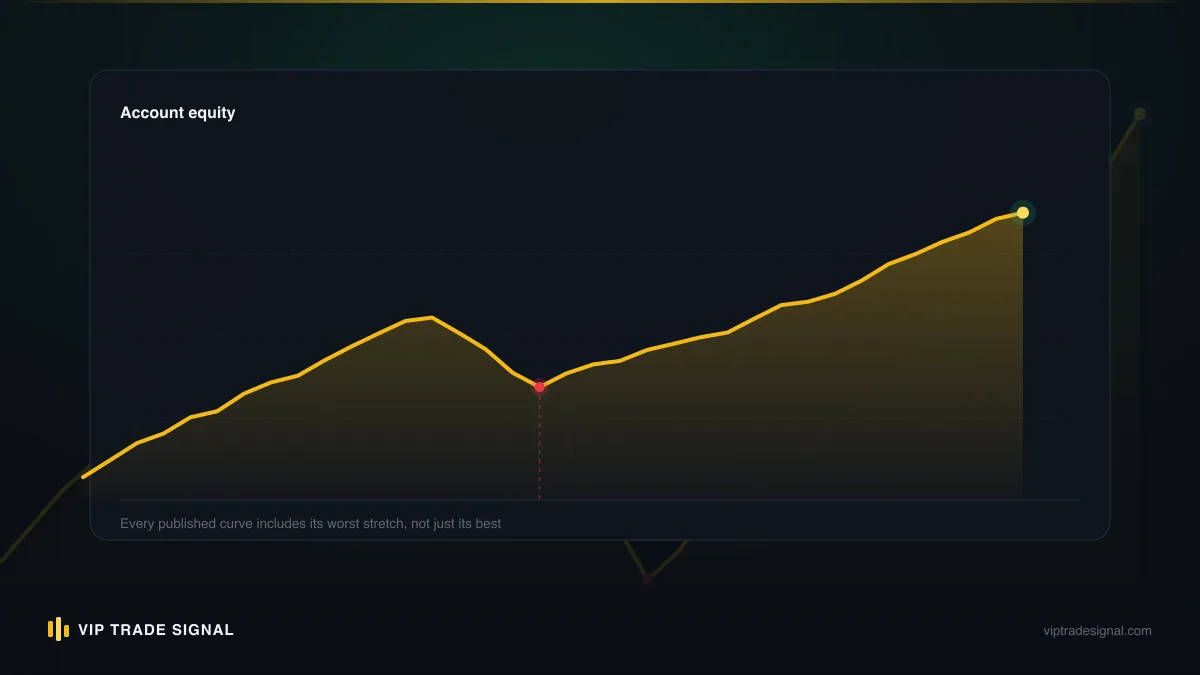
Run the thought experiment properly. Suppose 100 managers open PAMM accounts in January, and each of them simply gambles, taking huge positions with no edge at all. Pure coin flips at high leverage. After a year, luck alone will have blown up a large majority and left a handful with spectacular returns. After two years, maybe three or four coin-flippers remain, now sporting 24-month track records and triple-digit gains, sitting at the top of the rating page looking like exactly the kind of proven, consistent professional you've been told to look for. No skill was ever involved. The leaderboard manufactured the appearance of skill out of pure attrition.
Real leaderboards are worse than the thought experiment, because managers know the game and play it deliberately. Common moves we've seen over the years:
- The incubator. Open five master accounts, trade them aggressively in different directions, delete the losers, market the winner. Costs almost nothing, produces one great-looking track record on demand.
- The martingale grind. Add to losing positions, doubling down until price comes back. Produces a beautiful, smooth equity curve with a 95%+ win rate for months or years, because most positions eventually get bailed out by a retracement. Then one day price doesn't come back, and the account loses 60 to 100% in a week. The equity curve looked flawless the entire time. Smoothness is not safety. On PAMM leaderboards it's often the opposite.
- The reset. Blow up, vanish, reopen. A two-year-old platform profile with a three-month-old track record should make you ask what happened before the three months. The platform won't tell you.
Can you filter for any of this? Partially. Long track records under one identity, visible maximum drawdown, floating (unrealised) losses displayed rather than hidden, modest returns rather than spectacular ones. Those filters shrink the pool of candidates dramatically, and the managers who survive the filtering tend, funnily enough, to be the ones advertising 30% a year rather than 300%. But even good filtering can't solve the underlying problem, which is that you're choosing a stranger from a list built by a party paid on volume. We wrote about how the same selection problem plays out across pooled products in PAMM vs MAM vs copy trading, and the short version is that the leaderboard problem follows the pooling model wherever it goes.
A PAMM leaderboard doesn't show you the best traders. It shows you the traders who haven't blown up yet, sorted by how lucky they've been.
A word on "best PAMM account brokers" lists
One practical warning before we move to fees, because it's where most people's PAMM research actually starts. If you search for the best PAMM account brokers, nearly everything on page one is affiliate content: the writer earns a commission when you open an account through their link, and the "ranking" is, in practice, a ranking of who pays the writer most per referral. You can smell it in the prose. Every broker is "trusted", every platform is "user-friendly", risk gets one sentence in paragraph eleven, and the review somehow never mentions withdrawal queues or manager anonymity. That doesn't mean every broker on such a list is bad; the big regulated names appear there too. It means the list itself carries no information. Do the boring version instead: check the broker's actual regulator and licence number on the regulator's own register, search the broker's name next to the word "withdrawal" and read the complaints, and read the PAMM terms document, the real PDF, not the marketing page. Twenty minutes of that beats every top-ten list ever written, and it will disqualify more brokers than it approves. Which is the point.
The fees inside a PAMM structure
PAMM fees look simple from the brochure and get less simple the closer you look. There are usually up to four layers.
The performance fee is the headline number: a percentage of the profit the manager generates on your share, commonly anywhere from 20% to 50%, deducted at each rollover, usually above a high-water mark. This layer is fine in principle. Performance-only pricing aligns interests better than anything else in the industry, and it's the model we use ourselves. The problems with PAMM aren't really here.
The management fee is where you should start squinting. Some managers charge a percentage of assets annually, say 1 to 2%, regardless of results. On a pooled forex product with no regulation-grade oversight, a fee that pays the manager for existing is a red flag. A confident manager doesn't need one.
Entry and exit fees exist on some platforms: a percentage skimmed on the way in, or on early withdrawal. An exit fee that decays over time, say 5% if you withdraw within three months, is a soft lockup dressed as a fee, and it tells you the manager's strategy needs your money trapped to work.
And then there's the invisible layer: spread and commission. The manager trades, the broker charges the pool per lot, and that cost comes out of performance before any fee is calculated. Here's the ugly bit. Some brokers pay managers rebates on the volume they trade. A manager on volume rebates gets paid to overtrade your money, whether or not the trades make sense. If a manager's account shows hundreds of trades a month with tiny average profits, you may be looking at someone farming rebates with your capital, and the performance fee was never the point. This arrangement is almost never disclosed on the manager's profile page. We'd call that the single most under-reported fee problem in PAMM forex, and it's structural, because the broker benefits from it too.
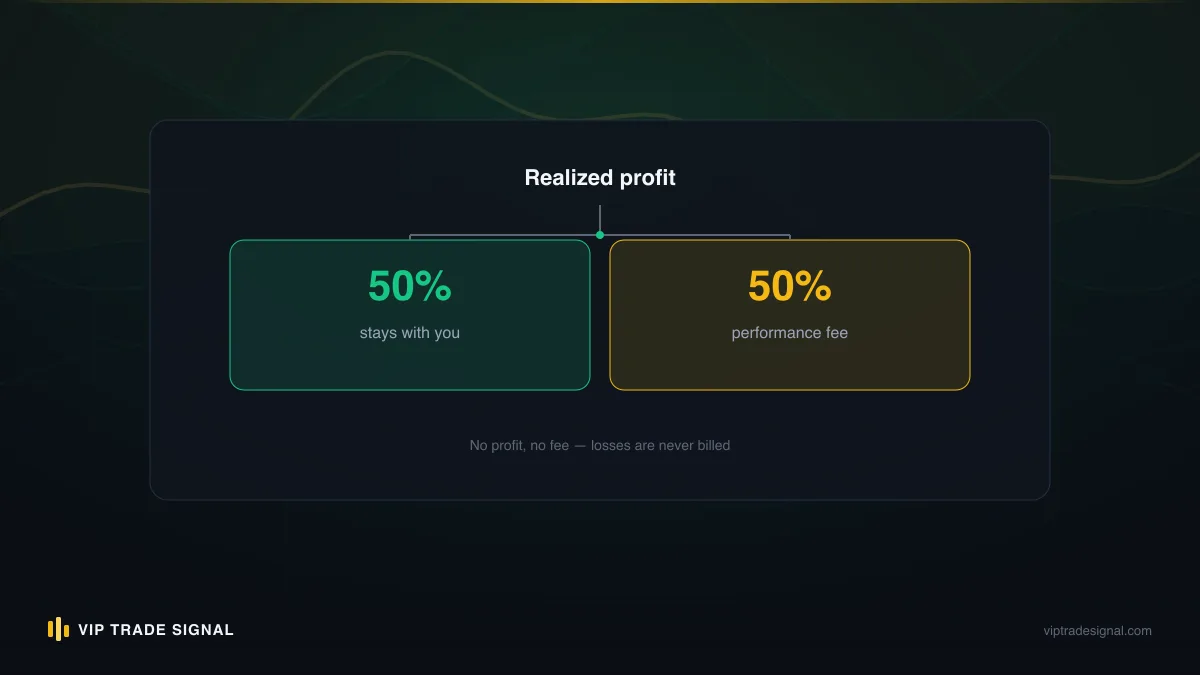
For calibration: our own account management service charges a flat 50% of realised profit, which is the very top of the range you'll see anywhere, and we say so plainly. The difference we'd point to isn't the rate. It's that there's no management fee, no entry or exit fee, no rebate motive, a $200 minimum advance rather than a five-figure minimum, and, above all, the fee is charged on an account you own and can close at any moment. Expensive and transparent beats cheap and pooled, in our obviously non-neutral opinion. You're welcome to disagree with the pricing; we'd just ask you to compare total structures, not headline percentages. There's a longer treatment of how performance-only pricing should work in our piece on performance-fee-only managed accounts.
The disadvantages nobody leads with
Time to do the section this article exists for. Search "pamm account" and read the first ten results, and you'll find the disadvantages, when they appear at all, compressed into two throwaway lines between paragraphs of affiliate enthusiasm. Here they are given the space they deserve, because these are the things that determine whether you get your money back.
Custody: your money lives in someone else's structure
This is the big one, and everything else is downstream of it. In a PAMM account you do not own a trading account. You own a claim on a percentage of a pool that sits inside a broker's software, attached to a manager's master account. Between you and your money stand two parties: a manager you've never met and a broker you've probably chosen because their leaderboard looked good.
Think through the failure cases, because custody only matters when something fails. If the manager blows up the pool, your loss is automatic and proportional; that's the visible risk, and at least it's honest. But if the broker is slow, insolvent, or crooked, your claim on the pool is only as good as the broker's operations. PAMM thrives disproportionately at offshore brokers, entities registered in jurisdictions where "regulation" means a certificate and a PO box, precisely because serious regulators in the UK and EU make pooled discretionary management legally burdensome. That's worth reading twice. The product concentrates where oversight is thinnest, and it isn't an accident: pooled money management is a regulated activity in most serious jurisdictions, and PAMM as retail brokers implement it exists substantially to route around that fact.
Compare the custody position with a managed account in your own name. When we manage a client's trading account, the account is theirs at their broker; they keep the master password; the trader connects with investor or trade-only access; and the client can withdraw funds or cut access whenever they like without asking anyone. Nobody can stop them, including us. That is a structurally different relationship with your own money, and no PAMM feature list closes the gap.
Anonymity: you're hiring a username
PAMM managers are, with rare exceptions, anonymous. A handle, a flag, a chart. You cannot verify their identity, their history before this account, their other simultaneously-run accounts, or whether the person trading today is the person who built the track record. When a manager's profile says "7 years of experience", the source of that claim is the manager. Try asking a PAMM platform for a manager's real name and regulatory status, and enjoy the silence. You would not hand $20,000 to an anonymous person in a car park because a stranger pointed at them and said "he's good". A leaderboard is the car park with better lighting.
Allocation opacity: you see results, not decisions
As a PAMM investor you typically see closed results per rollover period and a gain curve. What you often can't see, in real time: open positions, current floating drawdown, lot sizes, or leverage in use. A pool can be floating 40% down on open martingale positions while its published gain curve still shows every closed period in profit, because unrealised losses aren't losses until they're realised, and some platforms don't surface them at all. You find out when the positions close. By then the finding out is expensive. Any structure where the published numbers can be technically true and materially misleading at the same time deserves your suspicion.
Lockups and rollover queues: leaving takes longer than arriving
Remember the trading-period queue from the allocation section? Now imagine using it during a losing streak. You watch the pool drop 8% in a week, decide you're done, submit a withdrawal, and the platform informs you your request will be processed at the next rollover, ten days away. For those ten days your money remains fully exposed to a manager you've already decided you don't trust. Some managers set minimum investment periods of one to three months on top, with early-exit penalties. The polite name for this is "protecting the strategy from disruptive withdrawals". The accurate name is a lockup, and lockups always favour the manager. Money you cannot move on the day you want to move it is money that is only partly yours.
The high-water-mark trap: desperate managers trade desperately
One more, subtler than the rest. That high-water mark protecting you from double-billing has a dark side. A manager 25% under their mark earns nothing until the pool recovers the full 25%, which at their normal risk might take a year of unpaid work. Or they could triple the risk and try to get it back in six weeks. Every incentive in their life points at the second option; it's their income, and it's your money funding the attempt. The deepest drawdowns in pooled accounts frequently happen after the first big drawdown, for exactly this reason. If a pool you're in goes badly underwater, understand that the manager's incentives just changed, and not in your favour. It's the same psychological trap that wrecks self-directed traders in recovery mode, which we've dealt with from the drawdown side elsewhere on this site, and giving the trap a performance fee doesn't defuse it.
When PAMM genuinely makes sense
Fair is fair, and there are cases where a PAMM account is a defensible choice rather than a mistake.
The honest use case is small-ticket diversification into strategies you can't otherwise access. If you have, say, $3,000 of genuinely risk-capital, money whose total loss you've already priced in, and you want exposure to an active trading strategy without doing the work, PAMM's low minimums make it one of the few doors open to you. Traditional managed accounts historically wanted $25,000 or more (ours is a deliberate exception, and even then a small account limits what sensible position sizing can do). A PAMM slot might cost $500. For that kind of money, buying a lottery-ticket-shaped exposure to a filtered, long-track-record manager is a legitimate speculative position, provided you call it what it is.
PAMM is also, credit where due, operationally slick. Allocation is automatic and mathematically fair between investors; nobody gets the good fills while you get the bad ones, because there's only one fill. Fees calculate themselves. For a passive allocator sprinkling small amounts across several managers as an experiment, the infrastructure genuinely works. If you're exploring that route as part of a broader look at hands-off approaches, our piece on passive income from forex trading covers where pooled products sit among the alternatives, and why "passive" deserves scare quotes almost everywhere it appears in this industry.
What PAMM is not, ever, is a savings vehicle. Money you'll need for anything, ever, at a knowable date, does not belong in an anonymous stranger's leveraged forex pool at an offshore broker. Most retail traders lose money trading CFDs; handing the same instruments to a stranger doesn't repeal that, it just changes whose hands are on the wheel when the losses arrive.
If you use PAMM anyway: nine rules
Some of you will invest in a PAMM account regardless of everything above, and that's your call to make. Here's the checklist we'd use, in order.
- Cap the allocation at money you can lose entirely. Not "would prefer not to lose". Can lose, entirely, without changing your life. Pooled leveraged forex can go to zero and has, many times.
- Broker first, manager second. A brilliant manager at a broker that won't pay withdrawals is worth nothing. Prefer regulated entities you'd trust with a normal account; treat pure-offshore PAMM shops as the hard mode they are.
- Demand a track record of two years or more under one identity, and treat any gap or restart as disqualifying. Short brilliant records are the survivorship funnel talking.
- Read the drawdown before the return. A manager showing 30% annual gain with 12% max drawdown is a different species from one showing 300% with drawdown undisclosed. If maximum drawdown isn't published, assume it's horrifying.
- Check whether floating losses are visible. If the platform shows only closed results, you cannot distinguish a healthy pool from a martingale time bomb. That's not a small gap; on some platforms it's the whole risk.
- Read the withdrawal terms before depositing, not after. Rollover frequency, minimum investment period, exit penalties. Write down, in days, how long your money takes to leave at worst. If the answer exceeds 30, walk.
- Look at trade frequency for rebate farming. Hundreds of trades a month with tiny average results is a volume operation, not a strategy.
- Check the manager's own capital as a percentage of the pool. A manager with 0.3% of the pool at stake is trading other people's money with other people's risk. Skin in the game is a ratio, not a checkbox.
- Diversify across managers if you must be in at all, and expect it to help less than you'd think, because PAMM managers at the same broker often trade the same handful of pairs the same way, and correlated pools all drown in the same storm.
Follow all nine and you'll have filtered out the worst of the space. You still won't have fixed custody, anonymity, or lockups. Nothing fixes those. They're load-bearing walls, not decoration.
The own-account alternative
We should finish where our bias lives, openly.
Everything in this article's disadvantages section shares one root: in a PAMM structure, the money leaves your control. Custody risk, anonymity risk, opacity, lockups, all of it flows from that single design decision to pool funds in someone else's account. So the obvious question is whether you can get the thing people actually want from PAMM, a capable trader making the decisions, without that decision. You can, and it's older than PAMM: managed trading on an account you own.
The shape of it, as we run it: you open (or keep) your own MT4 or MT5 account at your broker, in your name, under your master password. The desk trades it through separate access. You watch every position live, because it's your platform. You can withdraw whenever you like. You can revoke access in about ninety seconds on a bad Tuesday, and the trader finds out afterwards, which is exactly the direction that power should point. The fee is 50% of realised profit with a $200 minimum advance, nothing else; no profit, no fee, and we'll say the required thing out loud because it's true: losses happen, drawdowns happen, and anyone managing money who won't say so is selling something. Details and the boring specifics live on the account management page and in the FAQ.
Is 50% steep against a 30% PAMM performance fee? On paper, yes, and we've never pretended otherwise; our fees sit at the high end because the minimums are low and everything is pay-as-you-go. But run the comparison honestly. The PAMM's 30% often arrives alongside a management fee, exit penalties, an invisible rebate motive, and, above all these, a custody structure where leaving takes a fortnight and the person trading has no name. Price the custody. Price the lockup. Price knowing, at 2 a.m. during a bad week, that you could log in and see every open position, and end the arrangement by morning. We think the gap closes fast, and for some people it inverts entirely. You may weigh it differently, which is fine; the point is to weigh it at all, because PAMM marketing is built on the hope that you won't.
Where this leaves you
Strip the article to one page and it reads like this. A PAMM account is a pooled managed account: elegant allocation maths, low minimums, real convenience, wrapped around a custody structure that puts your money in an anonymous stranger's master account at a broker paid on volume, selected from a leaderboard that survivorship bias has scrubbed of every warning you needed. The mechanics are fine. The incentives are not, and incentives win over mechanics on a long enough timeline, every single time.
So before you allocate a pound to any pool, sit with three questions. Who actually holds my money, and what, specifically, must go right for me to get it back? What is the real name and full history of the person trading it? And how many days, counted honestly against the worst case in the terms, stand between deciding to leave and being out? If the answers are "a structure I don't fully understand", "I don't know", and "more than a fortnight", you have your assessment, whatever the gain curve says.
And if what you wanted all along was just a capable trader on your capital without surrendering the keys, that product exists, on your own account, with your name on it. Whether it's with our desk, where signals stay gold-only and every closed result sits publicly at /signals/history, wins and losses alike, or with someone else entirely, insist on the structure: your account, your password, your exit. The trader should be replaceable. Your custody shouldn't be negotiable. Get those two the right way round and most of this article's warnings become someone else's problem.