A trader we'll call Dan, from Leeds, messaged us last spring. He'd wired £4,000 to a "fund manager" off Instagram: Mayfair address in the bio, screenshots showing 40% months. Three weeks later the account was gone. Not drawn down. Gone. Traded into the floor, and when Dan asked what happened, the reply was a shrug emoji and an offer to "recover it" for another deposit.
Dan's first question to us was the one everyone asks too late: wasn't that illegal? The honest answer is complicated, which is exactly why this article exists. The market for managed forex accounts UK residents can actually access is a strange, lopsided thing — a thin layer of genuinely FCA-authorised wealth management sitting on top of a vast grey ocean of offshore operators, Telegram "traders", and everything in between. Almost nobody explains where the legal lines actually sit, because almost everyone selling management has an interest in blurring them.
We run an account management service ourselves, and we are not FCA-authorised (we'll be completely straight about what that means later in the piece). But precisely because we operate in this market, we know where the bodies are buried. So let's walk through it properly: what UK regulation covers, what it doesn't, why the industry is structured the way it is, and how you protect yourself when the regulator can't do it for you.
Managed forex accounts UK residents can actually access
Start with a sober map of the territory, because the phrase "managed forex account" covers wildly different animals.
At the top end you have discretionary investment managers: proper FCA-authorised firms with permissions to manage investments. These exist. They are real, they are regulated, and they almost certainly don't want your business unless you're bringing £100,000 or more, often much more. Forex specifically is a rounding error for most of them; they run diversified portfolios and a currency overlay at best. If you walk in with £5,000 and ask them to trade gold CFDs aggressively, they will show you the door, politely, because their compliance department would have a seizure.
In the middle sits a thin band of authorised firms offering MAM and PAMM structures, meaning pooled or mirrored trading across many client accounts under one manager. Some are legitimate and regulated in decent jurisdictions. A few even hold FCA permissions. The minimums here usually start around £10,000–£25,000, and the good ones are boringly conservative, targeting maybe 10–20% a year with tight drawdown limits. That's what professional money management actually looks like, and it disappoints people raised on Instagram returns.
Then there's everything else. Individual traders managing accounts through a power of attorney on the client's own broker account. Offshore companies registered in St Vincent or the Seychelles running MAM accounts at offshore brokers. Telegram personalities collecting logins. Copy-trading arrangements dressed up as management. This bottom layer is where nearly all retail-sized management happens, anything from £200 to £20,000, and virtually none of it is FCA-regulated. Not some of it. Virtually none.
That's the market. One regulated shelf you probably can't reach, and a huge unregulated floor where you'll actually be shopping. The rest of this piece is about surviving the floor.
What FCA authorisation actually covers, and what it doesn't
Managing someone else's investments for reward is a regulated activity in the UK under the Financial Services and Markets Act 2000. If a person or firm carries on that activity in the UK without authorisation or a valid exemption, they're breaching what the law calls the general prohibition. That's a criminal matter for the firm. Note the emphasis: for the firm. You, the client, are not committing an offence by using them. More on that shortly.
When a firm is genuinely FCA-authorised with the right permissions, you get a stack of protections that are easy to take for granted:
- Conduct rules. The firm must assess whether the product is suitable for you, disclose fees clearly, and treat you fairly under the Consumer Duty. There are rules about how they market to you and what they can promise.
- Client money rules. If they hold your money, it sits segregated under CASS rules, not in the director's personal Revolut.
- The Financial Ombudsman. If they mistreat you, there's a free dispute service that can order compensation.
- FSCS cover. If the firm fails while owing you money, the Financial Services Compensation Scheme covers up to £85,000 per person per firm.
That is a serious safety net. And here's the part the industry glosses over: none of it extends offshore. An FCA-authorised broker in London gives you those protections on the broker relationship. A manager in Dubai trading that account gives you none of them on the management relationship. People conflate the two constantly, and marketers encourage the confusion: "trade with an FCA-regulated broker" is deliberately worded to make the whole arrangement sound regulated when only one half of it is.
One more wrinkle worth knowing. FCA authorisation is permission-specific. A firm can be on the FCA register for, say, insurance mediation and have no permission whatsoever to manage investments. Scammers exploit this by quoting a real FCA reference number that belongs to a different activity, or to a different firm entirely. That's the clone-firm scam. Checking the register means checking the permissions and the contact details, not just the number.
Why most managers serving UK clients sit offshore
If FCA authorisation is so valuable, why doesn't everyone get it? Because it's brutally expensive and, for retail-sized forex management, commercially impossible.
Run the numbers. Direct FCA fees are the small part. The real costs are capital requirements (a discretionary manager needs a permanent minimum capital, typically £75,000 or more depending on the firm category), compliance staff or consultants at £50,000+ a year, professional indemnity insurance, an application process that takes six to twelve months, and ongoing reporting that eats a full-time role. Realistically you're looking at £150,000–£250,000 before you've managed a single pound, and six figures a year to keep the lights on.
Now look at the revenue side. A manager charging a performance fee on retail accounts of £1,000–£10,000 needs hundreds of clients producing consistent profits just to cover compliance costs, let alone earn a living. The maths doesn't work. So the retail end of the market did what regulated cost structures always push people to do: it moved to where the costs aren't. St Vincent and the Grenadines, the Seychelles, Vanuatu, Mauritius, or no company at all, just an individual with a power of attorney form.
There's a second, less flattering reason. Leverage. UK and EU rules cap retail forex leverage at 30:1 and gold at 20:1. Most aggressive management strategies (and let's be honest, most clients handing £2,000 to a stranger want aggression) need 1:200 or more to function. Offshore brokers offer 1:500 without blinking. So the manager goes offshore for costs, the account goes offshore for leverage, and the whole arrangement quietly exits every protection the UK system offers.
Neither reason makes an offshore manager a fraud. Plenty of honest traders manage accounts from unregulated structures because it's the only economically viable way to serve small accounts. We're one of them. But it does mean the burden of protecting yourself moves entirely onto how the arrangement is structured. Regulation isn't going to save you down here. Structure might.
Is it legal for you, the UK client?
Short answer: yes. Using an offshore or unregulated account manager is not an offence for a UK resident. The general prohibition binds the person carrying on the regulated activity, not the consumer receiving it. You will not get a knock on the door for signing an LPOA with a trader in Kuala Lumpur.
But three legal realities should still shape your thinking.
First, contracts made through an unauthorised firm can be unenforceable against you under FSMA, which sounds like a win, and occasionally is, but cuts both ways in practice. If things go wrong, your ability to sue a Seychelles shell company from a county court in Manchester is theoretical at best. Whatever the contract says, treat your practical legal recourse as roughly zero. Price that in before you deposit.
Second, financial promotions. It's an offence to communicate an invitation to engage in investment activity to UK persons unless the promotion is approved by an authorised firm or exempt. Every unregulated manager sliding into UK traders' DMs with "guaranteed 10% monthly" is likely committing this offence. Again: their offence, not yours. But it tells you something about the operator: anyone marketing hard at UK retail from offshore either doesn't know the rules of the market they're selling into, or doesn't care. Neither is a great trait in someone about to control your money.
Third, the FCA's warning list. The regulator maintains a public list of firms it believes are targeting UK consumers without authorisation, and it's genuinely worth searching before you engage anyone. Absence from the list proves nothing; the list is reactive, and new operators appear weekly. But presence on it is disqualifying. If your prospective manager is on the FCA warning list and their pitch is "the regulator just doesn't understand our model", walk. Run, actually.
So the legal position is permissive but lonely: you're allowed to do this, and you're on your own if it goes wrong. Which brings us to the part of this article that actually protects money.
Structural protection: the three things that matter more than a licence
Here's an opinion we'll defend all day: for a retail-sized managed account, structure protects you more than regulation ever has. A licence tells you a firm passed an application process. Structure determines what a manager can physically do with your money. And structure is checkable in ten minutes.
Three elements do almost all the work.
Custody: the money stays in your name. The single most important question in all of managed forex: whose name is on the broker account? If the answer is yours (you opened it, you verified it, your bank card funds it) then the manager never touches your capital directly. They can trade it, and yes, they can lose it in trades, but they cannot withdraw it, redirect it, or vanish with it. Every catastrophic theft story in managed forex (as opposed to a bad-trading story like Dan's) starts with money sent to the manager or to an account the manager controls. "Send funds to our company wallet" is not a managed account. It's a donation with extra steps.
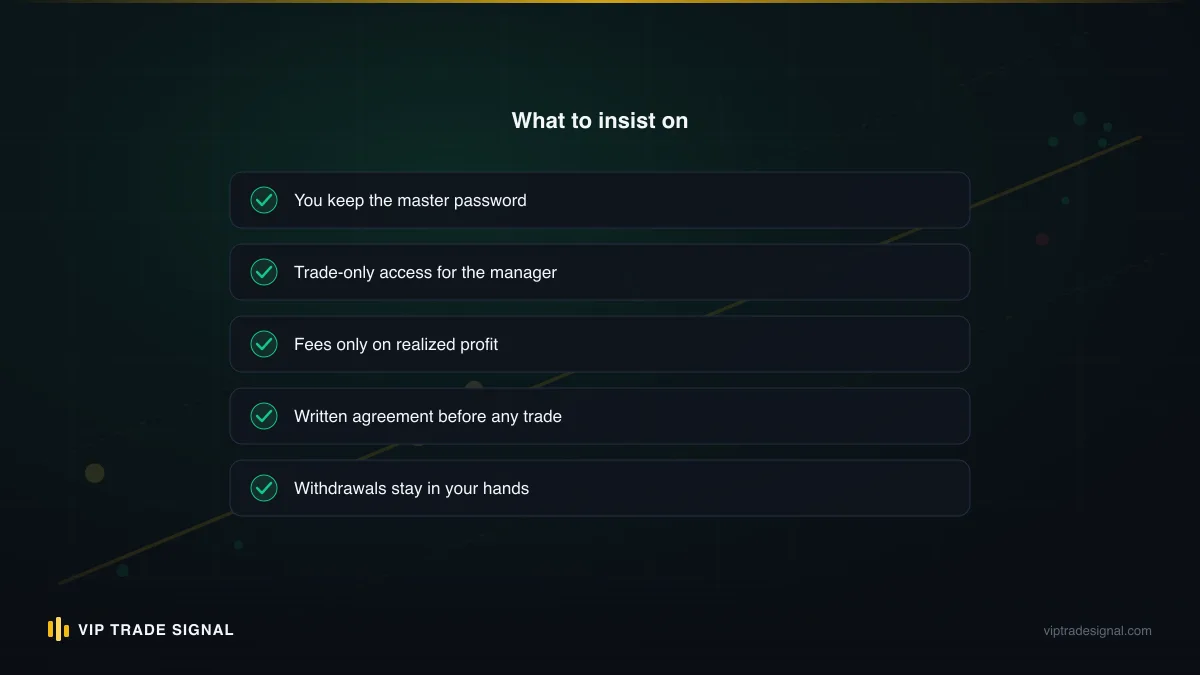
A limited power of attorney, not your passwords. The clean mechanism is an LPOA lodged with the broker: a document authorising the manager to place trades on your account and nothing else. No withdrawals, no changing the registered email, no closing the account. On MT4/MT5 the practical equivalent is trade-level access while you keep the master password. And if a manager asks for your master password, that alone should end the conversation. We've written up exactly why in our piece on investor versus master passwords, and it's worth five minutes if the distinction is fuzzy. The short version: master password controls the account; investor password only observes it; a properly structured management arrangement needs the manager to have neither of the credentials that matter.
Your own eyes on the account, live. You should be able to open the platform any evening and see every position, every lot size, every open drawdown, in real time. Not a weekly PDF. Not a Telegram screenshot. The actual account. Any manager who resists live visibility is hiding either incompetence or a strategy you'd veto if you saw it, usually a grid or martingale that looks like free money right up until it isn't. We've dissected why martingale wrecks managed accounts at length; the pattern is dozens of tiny wins and then one week that deletes the account, and live access is how you spot the position-stacking before the deletion.
A licence tells you a firm passed an application. Custody tells you what a manager can physically do with your money. Only one of those is checkable in ten minutes from your sofa.
Put those three together (your account, limited trading access, live visibility) and you've converted the risk profile completely. The manager can still trade badly. Nothing structural prevents losses, and anyone who implies otherwise is lying to you. But theft, lockout, and slow invisible bleed all become mechanically difficult. That's the trade you're making when regulation is off the table: you can't stop bad trading, so you make everything other than bad trading impossible.
MAM, PAMM or LPOA: which plumbing are you actually buying?
Before you can vet a provider, it helps to know which of the three standard mechanical arrangements they're selling, because the acronyms get thrown around interchangeably and they are not interchangeable at all. The custody question (whose name, whose withdrawal rights) plays out differently in each.
A PAMM (percentage allocation management module) pools client money into one master account at the broker. You buy a percentage of the pool; the manager trades the pool; profits and losses are allocated pro rata. The convenience is real, but so is the concentration: your money's fate is bound to one master account you don't control, and everything depends on the broker running the PAMM being solvent and honest. If the broker is an obscure offshore brand chosen by the manager, you've stacked two counterparty risks on top of each other.
A MAM (multi-account manager) keeps money in individual client accounts, each in the client's own name, while letting the manager fire trades across all of them from one terminal, usually with per-client risk multipliers. Structurally much better: the custody stays yours. The thing to check is what the MAM authorisation at the broker actually permits. A well-configured MAM gives the manager trade rights only; a sloppily configured one can bundle in permissions you'd never knowingly grant.
An LPOA on your individual account is the simplest of the three and the one we favour. No pool, no master terminal, just a document (or trade-only credentials) letting a named manager trade one account: yours. Everything in this article's structural-protection section applies at full strength. The cost is administrative (the manager is placing or copying trades per account rather than broadcasting once), which is why some managers refuse to work this way below a certain balance.
| PAMM | MAM | Individual LPOA | |
|---|---|---|---|
| Money held in | Pooled master account | Your own account | Your own account |
| Withdrawal rights | Via pool redemption | Yours alone | Yours alone |
| Live position visibility | Usually allocation-level only | Full, your platform | Full, your platform |
| Counterparty layers | Manager + broker + pool | Manager + broker | Manager + broker |
| Typical minimum | £500–£5,000 | £2,000–£10,000 | Varies, can be low |
| Exit speed | Redemption cycle (days–weeks) | Revoke, same day | Revoke, same day |
The pattern in that table isn't subtle. Every step from pooled towards individual custody trades a little convenience for a lot of control, and the exit column matters more than people think. In a PAMM you leave when the redemption cycle says you can, which in a crisis is exactly when everyone else is leaving too. On your own account you leave the moment you decide to, by changing a password. In a market with no regulator to appeal to, the speed of your exit is a protection in itself.
Choosing a broker for a managed account from the UK
The broker choice interacts with everything above, and UK clients face a genuine fork.
Option one: an FCA-regulated broker. You keep FSCS cover on the broker, segregated client money, and the Ombudsman for broker disputes. The costs: leverage capped at 30:1 forex and 20:1 gold, which rules out many management strategies, and plenty of managers simply won't work through UK brokers because their systems and rebate arrangements live offshore. If a manager's strategy genuinely works at 20:1, with modest risk, wide stops and sane sizing, this is the safest home for the account. Some strategies do. Most retail-pitched ones don't, and that itself tells you about their risk appetite.
Option two: a reputable offshore broker. Higher leverage, manager compatibility, usually faster onboarding. You give up FSCS and the Ombudsman, so the broker's own standing becomes the safety net. If you go this route, favour large, long-established names that hold real licences somewhere meaningful (an offshore entity of a group that also holds FCA, CySEC or ASIC licences is a different beast from a two-year-old brand licensed nowhere but St Vincent). Withdrawal speed and processing history matter more than spread on the tenth decimal.
A few practical notes either way. Fund the account from a UK bank account in your own name; it keeps the money trail clean for both recourse and tax. Keep the broker relationship yours: your email, your phone number, your verification documents. And be suspicious of any manager who insists on one specific small broker you've never heard of. Sometimes that's an innocent rebate arrangement. Sometimes the "broker" and the manager are the same people, and the platform numbers you're watching are fiction. If the broker only exists in the manager's marketing, the account may only exist there too.
The choice, honestly, mirrors the structure of this whole market: regulated and restrictive, or flexible and unprotected. There's no third option where you get 1:500 leverage plus FSCS cover, and anyone offering it is selling something that doesn't exist.
Tax: the part nobody budgets for
Standard caveat, meant sincerely: we're traders, not accountants or advisors, and UK tax treatment turns on your personal facts. Get an accountant's view before the gains arrive, not after. That said, the basic terrain looks like this.
Most managed forex arrangements for UK residents run through CFD accounts, and CFD profits are normally chargeable to capital gains tax. You have an annual CGT exempt amount (a slim £3,000 these days; it used to be four times that), and gains above it are taxed at your CGT rate. Losses are usable: they offset gains in the same year and can carry forward if reported. Keep every statement, because a managed account can churn hundreds of trades a year and you, not the manager, are the one HMRC will ask.
The famous wrinkle is spread betting. Profits from spread betting are generally free of CGT and income tax for UK individuals because they're treated as gambling winnings. Cue the obvious question: can you get an account managed on a spread betting platform and bank tax-free gains? In theory some providers permit it; in practice it's rare, most managers don't operate on spread betting platforms, and there's a long-standing grey area about whether systematically managed, professional-looking activity keeps its gambling character. Anyone building their pitch around "tax-free managed trading" is selling you a tax position they aren't qualified to give and won't be standing next to you if HMRC disagrees.
Two more traps. If trading profits are your main livelihood and the activity looks organised and business-like, HMRC can in rare cases treat profits as income, taxed at income rates. That's uncommon for a passive managed-account client, but the risk grows with scale. And performance fees you pay the manager don't come with an automatic deduction; how fees net against your taxable gain depends on how the arrangement is papered. One reason we charge our fee only against realised profit and invoice it cleanly is that it keeps everyone's paperwork legible.
On the practical side, set up the record-keeping on day one, not in the panic before the January self-assessment deadline. Download the broker's full trade history monthly and archive it somewhere the manager can't touch; brokers merge, rebrand and occasionally vanish, and a UK client of a collapsed offshore broker has enough problems without also losing the evidence of their own gains and losses. If the account is denominated in dollars, as most offshore accounts are, remember that HMRC wants sterling figures, calculated at the exchange rate on the relevant dates, which means currency movement alone can create a taxable gain even in a flat trading year. An hour of an accountant's time before you fund the account is the cheapest piece of the whole arrangement.
None of this should scare you off. It should just go in the spreadsheet. A 30% gross year that you mentally spend before considering fees and CGT is how people end up disappointed by a genuinely good result.
Red flags in UK-targeted marketing
Offshore operators pitching British clients have evolved a specific camouflage, and once you've seen the patterns they're hard to unsee.
The borrowed postcode. A Canary Wharf or Mayfair "office" that is actually a £40-a-month virtual address. UK phone numbers that forward abroad. A .co.uk domain wrapped around a company registered in the Marshall Islands. None of this is illegal; all of it is theatre designed to make you extend UK-shaped trust to a business the UK has never heard of. Check Companies House. A real UK company has filings; a mailbox doesn't.
The FCA number that isn't theirs. As above: clone firms quote genuine reference numbers belonging to other businesses. The register entry lists official contact details; if the person you're talking to reached you from a different domain or a WhatsApp number, you may be talking to the clone, not the firm. The FCA publishes warnings about specific clones almost daily. This is the single most effective scam vector against UK consumers right now, precisely because checking "are they FCA regulated?" feels like due diligence.
"FCA-regulated broker" doing the lifting. Watch for the sleight of hand where the broker's regulation is presented as if it covers the management. It doesn't, and any pitch structured to imply it does is a pitch built on your confusion.
Monthly percentages, quoted flat. "8–12% monthly, consistently" is the tell of the whole genre. Compounding 10% monthly turns £5,000 into roughly £15.7 million in ten years; if that were achievable, the person achieving it would not need your five grand. Real managed performance is lumpy, includes losing months, and any honest provider says so unprompted. We publish every closed signal, wins and losses, because a track record with no red in it is a track record that's been edited.
Pressure and countdowns. "Only 3 slots left this month." A legitimate manager operating LPOAs on client accounts has no meaningful capacity constraint at retail scale. Scarcity in this market is nearly always manufactured, and it exists to stop you doing exactly what the next section tells you to do.
Recovery offers. The cruellest one. Lose money with one operator and a "recovery agent" appears, sometimes within days, offering to get it back for an upfront fee. It's frequently the same people, monetising their own victim list twice. No legitimate recovery works this way. Dan, from our opening, nearly fell for this one too.
The vetting checklist: ten questions before a UK client signs anything
Print this, or don't, but actually use it. Every question has a disqualifying answer, and the disqualifying answers are common.
- Whose name is the trading account in? Yours, or nothing. Money sent to the manager's account, wallet, or "pool" is money you should consider spent.
- What access does the manager get? Trade-only via LPOA or equivalent. Master password requests end the conversation.
- Can I watch the account live? Full platform access, every position, in real time. Statements-only visibility is a no.
- Are they FCA-authorised, and if they claim it, does the register entry match? Check permissions and contact details on the register itself. If they're honest about not being authorised, that's workable with structure; if they're dishonest about being authorised, done.
- Are they on the FCA warning list? Search the exact trading name and any company names. Presence disqualifies.
- What's the fee, and is it charged on profit or on deposit? Performance-only fees align interests. Flat monthly fees on the balance pay the manager whether you win or lose. Upfront "activation" fees are a tell.
- Show me the losing periods. Every real strategy has them. A provider who can't or won't show drawdowns is showing you marketing, not a track record. Ask for a third-party verified record (Myfxbook or similar, with the investor-access link, not screenshots).
- What's the strategy, in one paragraph? You're listening for risk per trade, stop-loss discipline, and instruments. "Proprietary algorithm" with no risk numbers is a non-answer. Grid and martingale answers deserve their own extra scrutiny; see the drawdown pattern discussed earlier.
- What happens when I say stop? You should be able to revoke access and withdraw within a day, no penalty beyond fees already earned. Lock-ins on a retail LPOA account exist only to trap you.
- Who exactly am I contracting with? A named individual or company, a verifiable registration somewhere, a written agreement. If the counterparty is a Telegram handle, your contract is a screenshot.
Ten minutes of this filters out the vast majority of what's pitched at UK traders. The survivors still carry trading risk, always and unavoidably, but at that point you're taking a trading risk, not a counterparty risk, and only one of those is a legitimate thing to be paid for taking.
Where we fit for UK clients, honestly
Time to mark our own homework, since we've spent four thousand words telling you how to vet people like us.
We are not FCA-authorised, and we won't pretend the economics point that way for a service like ours. You've read the section on why. What we offer instead is the structural model this article has been advocating, because we think it's genuinely the strongest protection available at retail scale. You open and own your MT4/MT5 account at your broker. You keep the master password and the only withdrawal rights; we couldn't move your money if we wanted to. We take trade-level access, we trade it (gold, XAU/USD, because that's the one market we actually know deeply), and you watch every position live whenever you like.
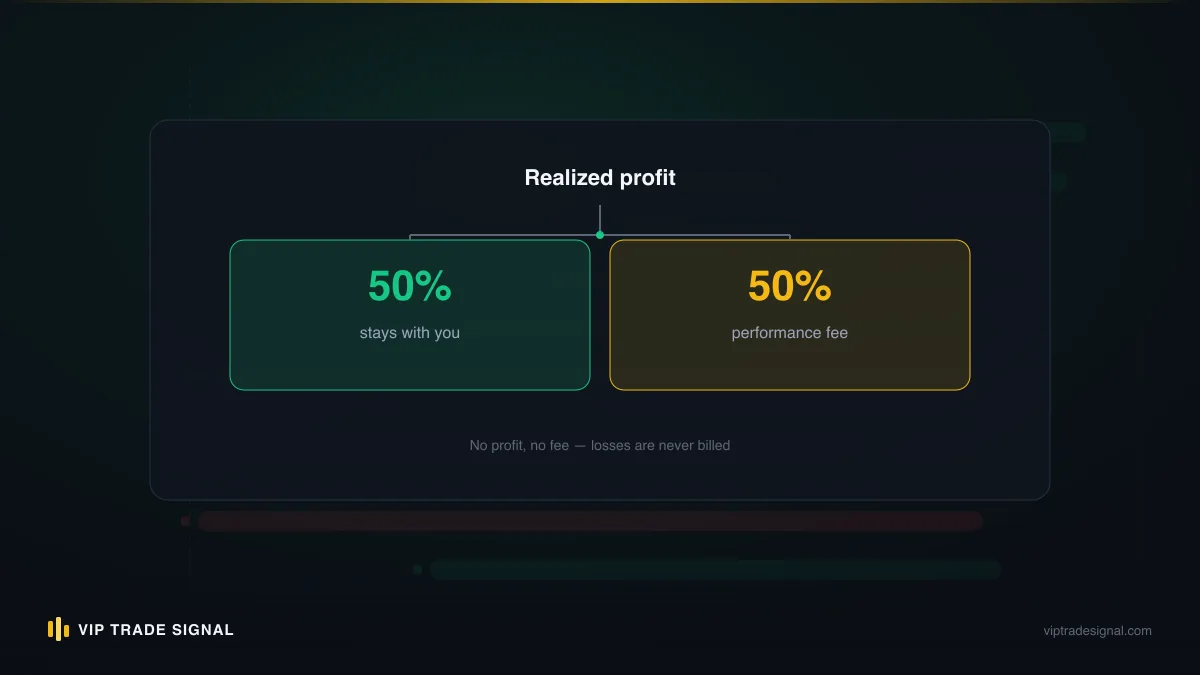
The fee is a flat 50% of realised profit with a $200 minimum advance that nets against future performance fees; the details live on the account management service page. Fifty percent is the high end of the industry, and we say so plainly: you're paying for a low minimum and a pay-as-you-go structure with no lock-in, and if the account doesn't make money, the performance fee is zero because there's nothing to take a percentage of. Losses happen. We've had losing weeks and we'll have more; every closed signal we've ever issued sits public at /signals/history, red ones included, because we'd rather lose a prospect to honesty than keep one on fiction.
And to be equally plain about the other side of the ledger: as an unregulated provider, we come with none of the FCA protections described above. No FSCS, no Ombudsman. Your protection with us is the structure (custody, limited access, live visibility) plus your right to revoke access any day you like. If you've read our sister piece on managed accounts for US clients, you'll recognise the same philosophy: where regulation doesn't reach, structure has to.
Nothing here is personalised advice, for the record. We don't know your finances, and we're not licensed to advise on them.
Where this leaves you
Strip away four thousand words and the position of a UK trader considering account management comes down to a short, uncomfortable decision tree.
If you have £100,000-plus and want regulated discretionary management, go get it. Pay the wealth-management fees, accept the modest returns, sleep well under the FSCS umbrella. That is genuinely the right answer for that money.
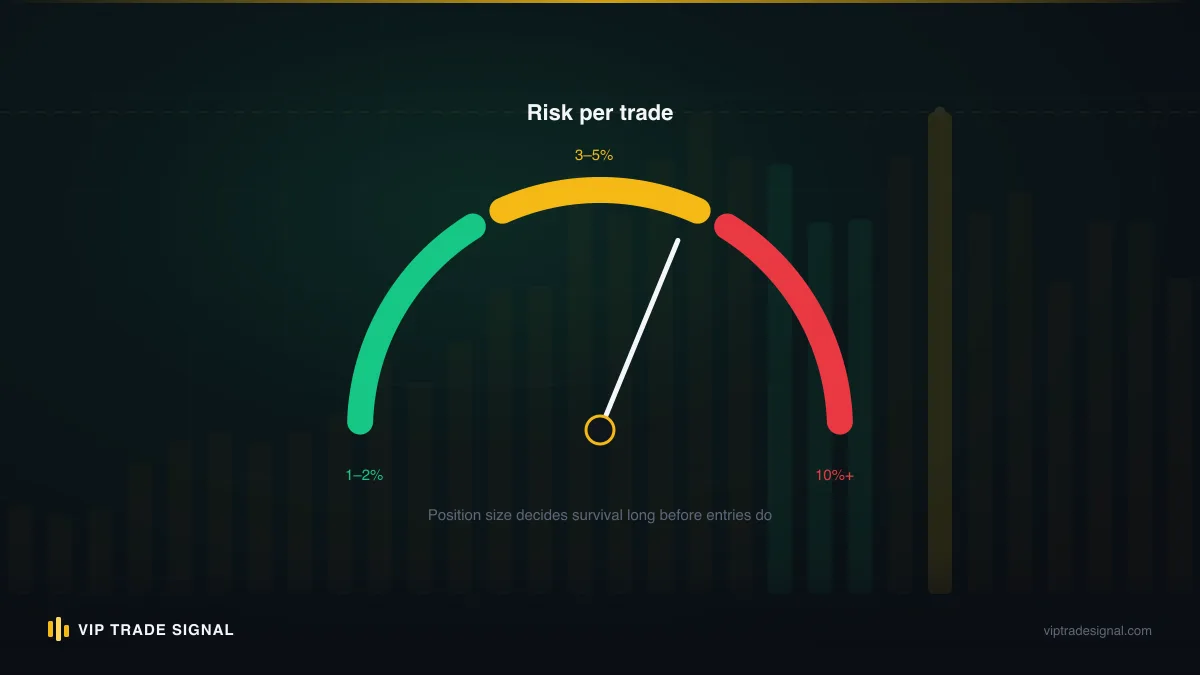
If you have £500 to £20,000, the money most people actually have, the regulated shelf isn't open to you, and pretending otherwise just delays the real decision. Your actual choice is between not doing this at all (a respectable choice; most retail forex accounts lose money, managed or not) and doing it inside a structure that removes every risk except the honest one. Your account. Your master password. A limited power of attorney or trade-only access. Live visibility. A performance-only fee. An exit you can trigger tomorrow. Any provider, us included, should clear every one of those bars before a pound moves, and the ones who won't clear them are answering your due diligence for you.
What regulation can't give you in this market, structure can — but only if you insist on it before you sign, because nobody offering you the weaker version will volunteer the stronger one. Insist. And if you want to see how our version of the structure holds up under those ten questions, ask us them directly, question seven included. The answers are the product.