There's a particular kind of quiet that settles over a hedged account. The floating loss stops moving. The margin level stops flashing at you. You close the terminal on a Friday and, for the first time in weeks, you don't think about gold over the weekend. It feels like you've stopped the bleeding.
You haven't. You've just moved it somewhere you don't look.
Swap costs on hedged positions are, in our experience, the single most under-priced cost in retail trading. Not spreads. Not commission. Swap. Because when you lock a losing position with an opposite trade, you almost always end up paying negative swap on both legs, every night, seven charges a week once you count triple swap Wednesday. On XAU/USD, where the swap asymmetry is the nastiest of any commonly traded instrument, a modest 0.50-lot lock can cost you more per month than most people's rent assumptions for their trading. And because the account looks frozen, nobody notices until the balance has quietly dropped by a four-figure sum. We've audited accounts where the swap bill over a locked period exceeded the loss the hedge was supposed to be protecting against. Let that one sit for a second.
This article puts actual numbers on it. What swap is, why hedges usually pay it twice, what a locked gold position costs by lot size per month, and how to factor the bleed into the only decision that actually matters: when and how you unlock.
What swap actually is, and when it hits your account
Swap (also called rollover, or overnight financing) is the interest adjustment your broker applies to any position held past the daily rollover time, usually 5pm New York. In spot forex you're notionally borrowing one currency to buy another, so you earn interest on the one you hold and pay interest on the one you borrowed. The net difference, plus the broker's markup, is your swap. It can be positive. It usually isn't.
Two things matter here and both get misunderstood.
First, swap is charged on positions held at rollover, not positions held overnight in the casual sense. Open a trade at 4:55pm New York and close it at 5:05pm and you've paid a full night's swap for ten minutes of exposure. Open at 5:05pm and close at 4:55pm the next day and you've paid nothing for nearly 24 hours. The clock, not the duration, is what counts.
Second, swap is charged per lot, per night, regardless of whether the position is winning, losing, or perfectly hedged. Your broker's server does not know or care that your 1.00 lot buy is "cancelled out" by a 1.00 lot sell. It sees two open positions and charges two swaps. There is no hedging discount. Some traders genuinely believe locked positions go dormant on the broker's books. They don't. Both legs sit there accruing financing like any other trade, and on most pairs, and emphatically on gold, both accruals are negative.
Where does the number come from? Roughly: the interest rate differential between the two sides of the pair, adjusted for the direction you're holding, minus the broker's cut. That last part deserves more attention than it gets. Brokers add a markup to both sides of the swap, which is exactly why you can find pairs where longs pay negative swap and shorts pay negative swap simultaneously. Pure interest-rate maths would make that impossible. Broker margin makes it routine.
A quick word on units, because this trips up nearly everyone the first time. Some brokers quote swap in the account currency per lot, which is easy: minus 28 means minus $28. Others quote it in points, or in annualised percentage terms, and a gold swap of "minus 28 points" is not the same money as minus $28. If your platform shows points, the rough conversion for XAUUSD is that one point is usually $1 per full lot per night at standard contract sizing, but check your broker's contract specification rather than my rule of thumb, because contract sizes differ and a factor-of-ten misread here will wreck every calculation that follows.
You can check your broker's exact rates in about thirty seconds: in MT4/MT5, right-click the symbol in Market Watch, hit Specification, and read "Swap long" and "Swap short". Do it now for XAUUSD if you've got a platform open. We'll wait, and the number will probably annoy you.
Why swap costs on hedged positions come out negative on both sides
Here's the mechanism, because once you see it you'll never un-see it.
Take a pair where the underlying interest differential is small, or where you're trading a metal like gold, which behaves like a currency with a near-zero yield against the dollar. In a world with no broker markup, the long swap and short swap would be roughly mirror images: if longs pay $10 a night, shorts might earn $8, with the small gap reflecting market financing spreads. Hedge both sides and your net cost would be a couple of dollars. Annoying, survivable.
Now add the broker's markup, say the equivalent of $15 per lot per night on each side. Long swap: minus $10 minus $15, so minus $25. Short swap: plus $8 minus $15, so minus $7. Hedge both sides and you're now paying $32 per lot per night, forever, to hold two positions that cannot make you money. The market risk is flat. The cost is not.
That's the general case. On gold specifically, the asymmetry is worse, and we'll get to exactly why in a minute. But the point to absorb here is structural: a hedge removes your exposure to price, and replaces it with a guaranteed, predictable, compounding exposure to financing. You've swapped a risk you might win for a cost you will definitely pay.
A hedge doesn't stop the losing. It changes the counterparty from the market to your broker, and the broker never has a bad month.
And the psychology is brutal, because the cost arrives in amounts small enough to ignore. Nobody panics over $32. People panic over the floating $4,000 loss, hedge it, feel clever, and then donate $900 a month in instalments of $32 without ever feeling a single one. If you've read our piece on trapped positions, you'll recognise the pattern: the lock is almost never a strategy, it's an anaesthetic. Swap is the price of the anaesthetic, and it's billed nightly.
One honest caveat. There are rare cases, mostly exotic currency pairs with big rate differentials and a generous broker, where one leg of a hedge earns enough positive swap to offset most of the other leg's cost. If you're locked on one of those, your bleed might genuinely be small. Check your statement rather than assuming. But for the majors, and for gold above all, assume both legs pay until your own statement proves otherwise.
Triple swap Wednesday, explained properly
Swap gets charged every rollover, but currency settlement works on a T+2 basis, and the weekend has to be paid for by somebody. Markets are closed Saturday and Sunday, yet the financing on your position doesn't take days off. So the industry's solution is to charge three days' worth of swap at one rollover during the week to cover the weekend.
For most forex pairs, that's Wednesday's rollover: a position held through Wednesday 5pm New York gets hit with three times the normal swap, which is why you'll hear it called triple swap Wednesday. For gold and silver, most brokers apply the triple charge on Friday instead, because metals settle differently. Some brokers do gold on Wednesday anyway. This is not trivia; it changes your arithmetic, so look it up in your symbol specification, where the triple-swap day is listed, rather than trusting a forum post from 2019.
The practical consequence: your position pays seven swaps per calendar week, not five. People doing quick mental maths on a locked position tend to count trading nights, get to 21 or 22 a month, and underestimate their bleed by about 30%. The real multiplier is roughly 30 charged nights per month. On a small lock that's the difference between "cheap insurance" and "hang on, where did that money go".
Worked example, because the multiplier matters more than the mechanism. Say your locked gold pair costs $17.50 a night. A casual count says five trading nights, $87.50 a week. The real bill: Monday, Tuesday, Thursday at $17.50 each, plus the triple night at $52.50, so $105 a week. Over a month that gap is roughly $70, and over the nine-month locks we regularly see, it's several hundred dollars of pure counting error. Bank holidays add their own wrinkle: the market's shut but financing usually isn't, and brokers handle holiday rollover in ways that vary enough that your statement, again, is the only source worth trusting.
There's a whole cottage industry of traders trying to exploit triple swap day by holding positive-swap positions through the triple charge and dumping them after. Fine, good luck to them, that's a different article. What matters for you, sitting on a hedged gold position, is the mirror image: triple swap day is the night your lock costs you three times as much, and if your lock spans a month, it happens four or five times. When we build an unlock plan for a client, we literally mark the triple days on the calendar, because if you're going to close a leg anyway, closing it before the triple charge rather than after is free money. Small free money. But you're in a hole; small free money counts.
The bleed table: what a locked gold position costs per month
Time for actual numbers. Swap rates vary by broker and move with interest rates, so treat this as an illustrative snapshot built from rates in the realistic middle of what we see across mainstream brokers, not a quote for your account. A fairly typical setup for XAUUSD right now: long swap around minus $28 per 1.00 lot per night, short swap around minus $7. Hedge both sides and the pair costs $35 per lot per night. Charge that roughly 30 times a month (weeknights plus the tripled weekend) and here's your bill.
| Lock size (each side) | Nightly cost | Monthly cost | Cost over 6 months |
|---|---|---|---|
| 0.10 + 0.10 lots | $3.50 | ~$105 | ~$630 |
| 0.20 + 0.20 lots | $7.00 | ~$210 | ~$1,260 |
| 0.50 + 0.50 lots | $17.50 | ~$525 | ~$3,150 |
| 1.00 + 1.00 lots | $35.00 | ~$1,050 | ~$6,300 |
| 2.00 + 2.00 lots | $70.00 | ~$2,100 | ~$12,600 |
Read that middle column again with your own account in mind. A 0.50-lot lock, which on a $10,000 account is not an outrageous position, costs roughly $525 a month to hold. That's 5% of the account, per month, guaranteed, for the privilege of not making a decision. Over six months you've paid away 30% of the account and the original losing position is still there, unresolved, underneath the hedge.
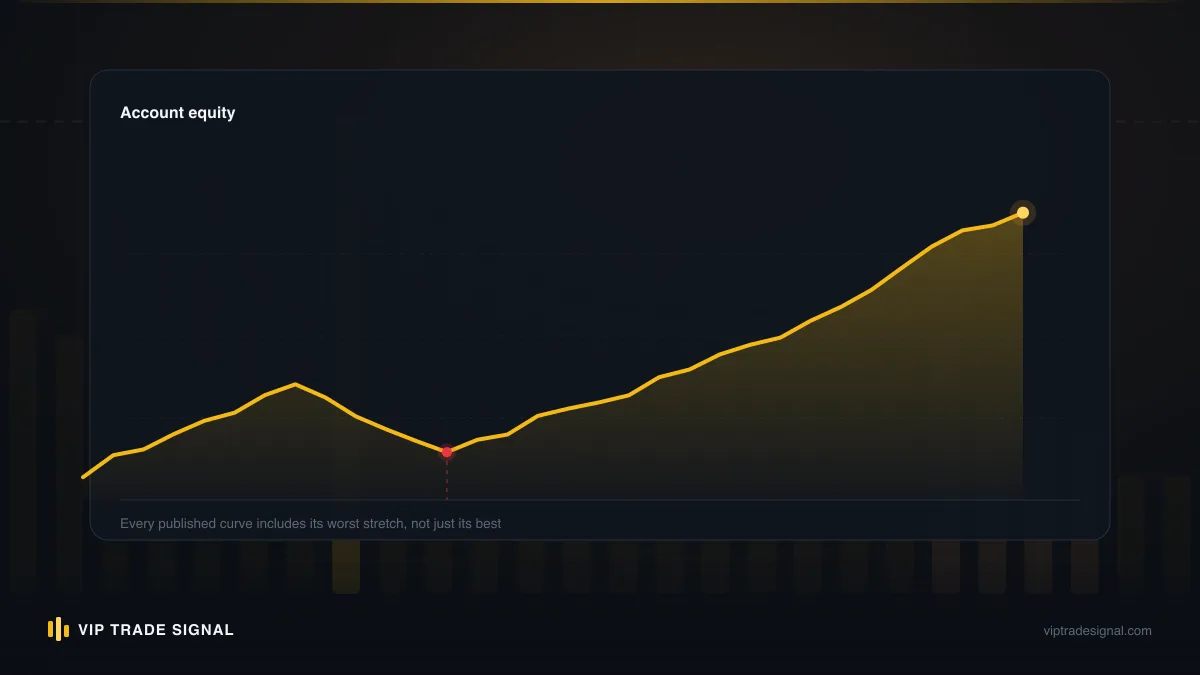
And this compounds against you in a second, sneakier way: as swap drains the balance, your equity falls even though your floating P/L is frozen, which drags your margin level down. We've seen locked accounts marched slowly toward margin call by swap alone, with price never moving against them, because the hedge froze the loss but the financing kept eating the free margin. The lock that was supposed to prevent the blow-up became the mechanism of the blow-up. Slowly, and then, one Wednesday night, quickly.
Worth saying plainly: the spread of rates between brokers is enormous, wider than the spread on almost any other cost they charge. We've seen gold long swap range from minus $18 to minus $55 per lot across firms that all look identical in the comparison tables, because comparison tables rank spreads and nobody ranks swap. If you habitually hold gold overnight, the swap rate should sit above the spread in your broker-selection criteria, not beneath it. A 0.3-pip tighter spread saves you $3 per lot per round trip; a $15-cheaper nightly swap saves you $450 a month on a held full lot. One of those numbers is marketing. The other is your P&L.
If your numbers differ from the table, good, use yours. The method is the thing: (long swap + short swap) × lot size × 30. One line of arithmetic. It's genuinely strange how few people holding hedges have ever run it.
Gold's swap asymmetry: why XAUUSD locks bleed fastest
Why is gold the worst offender? Because of what gold is, financially speaking: a zero-yield asset that you're holding against the US dollar, which for the past few years has paid meaningfully positive interest.
When you're long XAUUSD, you're effectively borrowing dollars (paying dollar interest) to hold metal (earning nothing, and incurring storage-and-financing costs in the institutional market besides). Every part of that equation runs against you, so the long swap on gold is deeply negative pretty much everywhere, at every broker, in every rate environment where dollars pay anything at all. Minus $25 to minus $50 per lot per night is the range we commonly see for gold longs. It is one of the most expensive things in retail trading to simply hold.
The short side should, by the same logic, pay you: you're holding dollars, earning their yield. And in a markup-free world it would. But the broker's cut eats most or all of it, so the typical retail gold short swap sits somewhere between slightly positive and moderately negative. Call it minus $10 to plus $3 across the brokers we see regularly. Negative swap gold shorts are common enough that you should never assume your short leg is earning without checking.
Put the two together and you get gold's signature asymmetry: a hedged XAUUSD position pays a large negative on the long leg and roughly nothing-to-negative on the short leg. There's no offset. Compare that to something like EURUSD, where a lock might cost $12 to $18 a night per lot, and gold's $30 to $50 per night starts to look like what it is: the most expensive instrument on your platform to sit locked in.
Which is bitterly funny, in a way, because gold is also the instrument people are most likely to lock. It trends hard, it runs further than round-number logic says it should, and traders who fade those runs end up deep underwater with no stop, at which point the hedge feels like the only humane option. The instrument most likely to trap you is the one that charges the most for the cell. We run a gold-only signal desk, every one of our closed calls sits publicly at /signals/history including the losers, and even we'd tell you flatly: the swap column is where gold quietly takes its pound of flesh from anyone who holds it wrong.
One structural note. Because gold's asymmetry comes from the dollar's yield, it softens when US rates fall. If dollar rates ever head back toward zero, gold locks get cheaper to hold. That's a reason to re-check your rates quarterly. It is not a reason to hold a lock and hope for rate cuts, which would make you a person hedged against price risk while speculating on central bank policy, and no, that's not a better position.
Nine months locked, $1,900 gone: a case study
Let's make it concrete with a composite of accounts we've actually walked through, details changed and rounded, the shape utterly typical.
A trader we'll call Dan sold 0.20 lots of gold at what looked like a blow-off top, then averaged into a second short. Price kept going. With the floating loss at about $2,300 and no stop (of course no stop), Dan bought 0.20 lots against it rather than take the hit. The account froze at minus $2,300 floating. Relief. He'd "protect the capital" and unwind the hedge at the perfect moment later.
You know how this goes. The perfect moment is a unicorn. Every dip looked like the start of the collapse that would let him close the long leg and ride the short back to breakeven; every rally punished the thought. So he waited. For nine months.
Now the arithmetic. His broker charged roughly minus $28 per lot on gold longs and minus $7 on shorts. His 0.20-lot pair therefore cost about $7 a night, times roughly 30 charged nights a month, so about $210 a month. Over nine months: a shade under $1,900. It never appeared as a red day. No single charge exceeded the price of a takeaway. But when he finally sat down with us and we pulled the swap column from his statement, the locked period had cost 82% as much as the loss he'd hedged to avoid. Another five or six months and holding the hedge would have cost more than closing the original trade on day one.
Here's the line from that conversation worth keeping: "I thought I was waiting for free." Nobody waits for free. Every night at 5pm New York, waiting had a price, printed in a column he'd never once scrolled across to read.
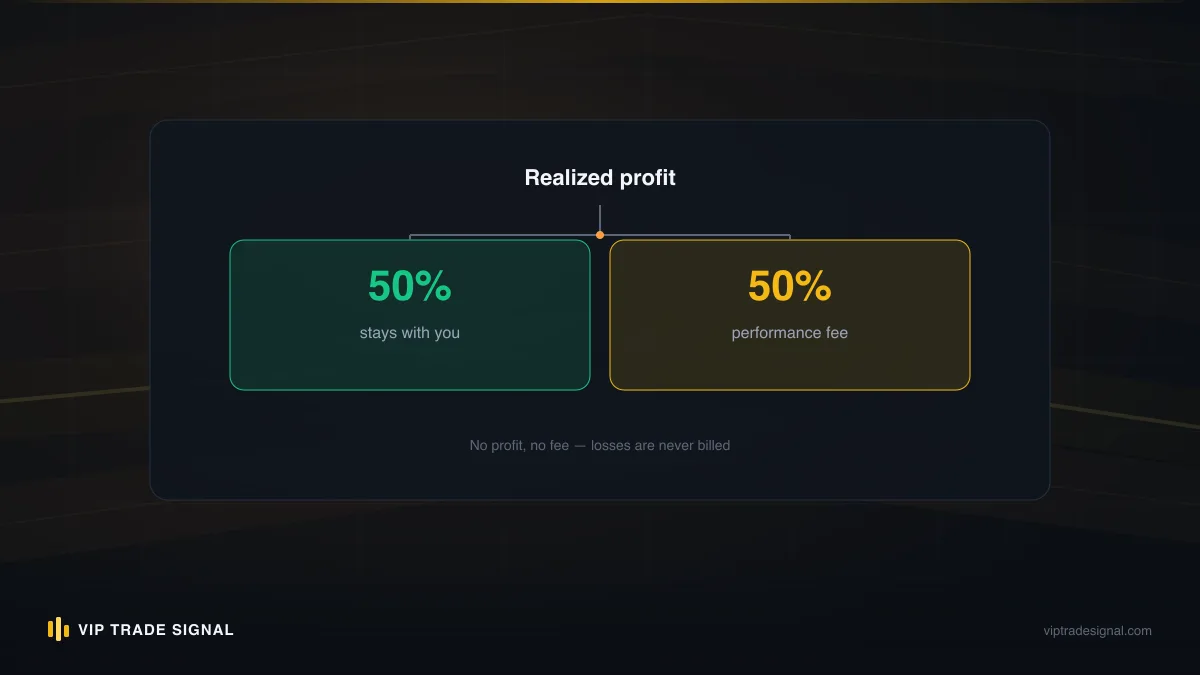
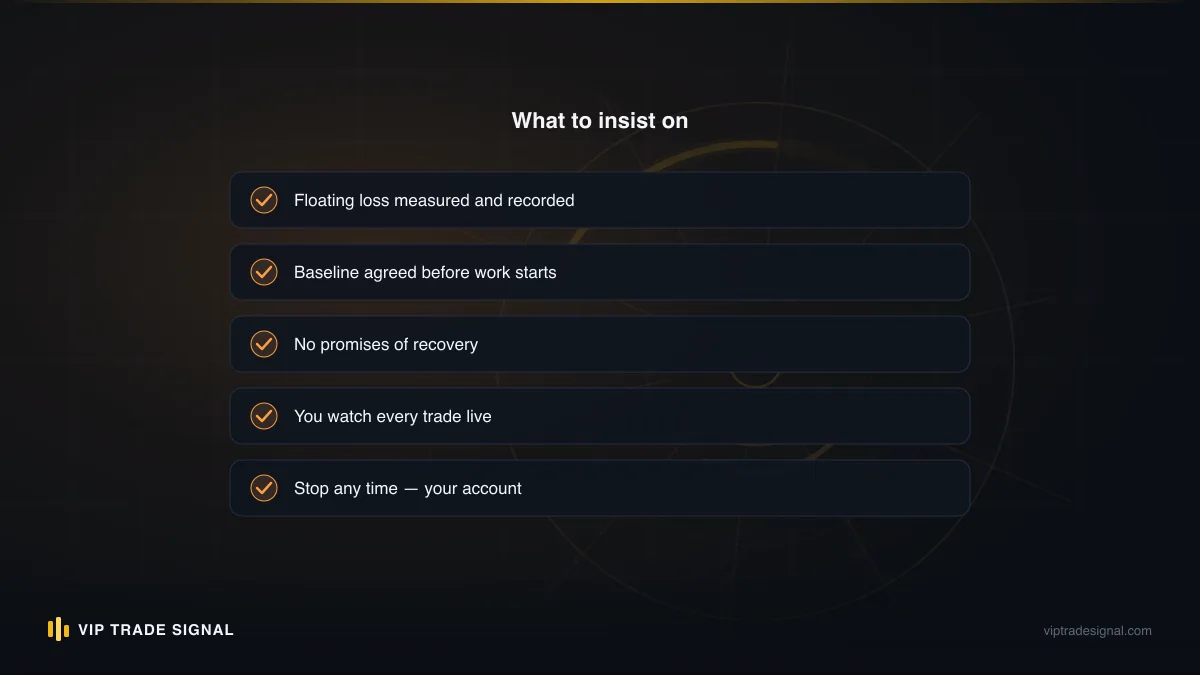
The resolution was boring, which is how you know it was right. We costed the bleed, set a hard unlock deadline, closed the long leg into a genuine resistance rejection over two weeks, and worked the remaining short with a stop like an adult trade. Dan ate the loss he could have eaten nine months and $1,900 earlier. If your account is sitting five or ten thousand down in a similar knot, that unwinding process is exactly what our drawdown management service exists for: flat 50% of whatever we recover above a baseline we record together, no recovery guarantees because honest people don't give them, and you keep control of the account throughout.
Swap-free accounts and the fine print nobody reads
At this point a reasonable person asks: why not just use a swap-free account? Most brokers offer them, originally as Islamic accounts for traders whose faith prohibits interest, now increasingly marketed to anyone who'll click. No swap means no bleed, which means hedging is free. Right?
Mostly no, and the reasons are worth spelling out because the marketing won't.
First, brokers are not charities. The financing cost your swap used to cover doesn't vanish; it moves. The common mechanisms: an "administration fee" per lot per night that is swap wearing a fake moustache; wider spreads on the swap-free account type; or, the big one, a time limit. Plenty of swap-free accounts are genuinely free of charges for the first five, ten, or fourteen nights a position is held, after which a flat nightly fee kicks in, and on gold that fee is frequently worse than the swap it replaced. A locked position, which by its nature sits for months, is precisely the position that ages past every grace period into the punitive tier.
Second, brokers actively police swap-free accounts for exactly the strategy we're discussing. Open the terms and you'll find abuse clauses letting the broker reclassify your account, retroactively charge financing, or close positions if they judge you're exploiting the swap-free status, and "held a long-term hedged position to avoid financing" is the canonical example of what they're looking for. We've seen traders hit with weeks of back-dated charges in one lump. Imagine nursing a lock for four months specifically because it was free, then getting the whole bill at once with a warning letter attached.
Third, and this is the one we actually care about: making the lock cheaper makes the real problem worse. Swap is the only force pushing you to resolve a locked position. It's the tapping foot, the meter running, the reason "later" eventually has to become "now". Take it away and a locked account will sit there for years, capital fully margined against itself, earning nothing, teaching you nothing. We'd rather you paid the swap and felt it. Pain that shows up in the statement is at least honest.
There's a related dodge worth naming: moving the hedge across two brokers, long at one, short at another, hunting the best swap on each side or a swap-free deal on the expensive leg. On paper it can halve the bleed. In practice you've split your margin, so a sharp move now produces a margin call at one broker while the winning leg's profit sits uselessly at the other, and you're wiring money between firms at 2am hoping the transfer lands before the stop-out does. We've seen the two-broker hedge turn a frozen loss into a realised one precisely because the protection lived in a different account from the danger. Cross-broker locks convert a financing problem into a liquidity problem, and liquidity problems kill accounts faster.
If you hold positions for days rather than months, directionally, without hedging, a legitimate swap-free account can be a fine tool, particularly on gold longs where the nightly cost is genuinely heavy. As a way to make locking sustainable, it's a trap with better upholstery.
Putting swap into your unlock deadline
Every locked position needs a deadline. Not "when price comes back", which is a wish, but a date. Swap is what turns that from discipline-speak into arithmetic, because a lock with a known nightly cost is a product you're buying, and you can decide, like with any product, how much of it you can afford.
Here's the frame we use on the desk. Your hedge is buying you time to resolve the position at a better price than today's. Fine. Price that time. A 0.50-lot gold lock at our illustrative rates costs about $17.50 a night. If unwinding cleverly, closing the right leg into the right level rather than panic-flattening both, might realistically save you $800 versus flattening today, then your hedge budget is $800, and $800 divided by $17.50 is about 45 nights. That's your deadline: six weeks or so. Past that point, the certain cost of waiting exceeds the plausible benefit, and every further night is you paying the broker to protect your ego from a number.
Run your own version tonight. Three inputs: combined nightly swap on both legs (from your statement, not the table above), the realistic saving a good unwind gets you versus flattening now (be honest, it's smaller than you hope), and the division. Whatever the answer, write the date down somewhere you'll see it, tell someone, put it in your phone. A deadline nobody else knows about is a suggestion.
Two refinements. Count triple swap days when the deadline is close; a Wednesday-versus-Thursday unlock on forex, or Friday on most gold accounts, moves the bill by two extra nights' worth. And re-run the maths monthly, because swap rates change with interest rates and broker whim, and we've watched a "cheap" lock become an expensive one mid-hold without the trader noticing. This is the same habit as the broader once-a-quarter review we push in the trading account health check: the statement columns nobody reads are where accounts actually die.
People push back on this frame with "but the market might hand me a perfect unwind next week, and the deadline would've made me miss it". Sure, it might. It might also hand you nothing for a year. The deadline doesn't stop you unlocking early into a gift; it stops you waiting indefinitely for one. A budget caps the downside of patience without touching the upside, which is the whole trick. Traders who resist writing the date down are almost never protecting a strategy. They're protecting the option of not deciding, and that option, as we've now priced to the dollar, is the most expensive thing on their statement.
And if the arithmetic says the deadline was three months ago? Then the maths has already made the decision, and your job is just to execute it this week rather than negotiate with it.
How swap changes which side you close first
Unlocking a hedge means choosing which leg to close and when, and most of the discussion (including ours elsewhere) treats it as a pure price question: close the leg fighting the trend, keep the one aligned with it, use levels, stagger the exit. All still true. But swap adds a second axis people miss, and on gold it's a heavy one.
The two legs cost different amounts to keep. On XAUUSD, the long leg is the expensive one, often by a factor of three or four. So all else being equal, the leg you keep for the longer, slower part of the unwind should be the cheap leg, and on gold that means there's a persistent financing argument for resolving the long side first and working the short side patiently. If your read on the market agrees, you get paid twice for the same decision. If your read disagrees, at least know the size of the toll you're choosing to pay: keeping a gold long open as your "recovery leg" at minus $28 a night means it needs to out-earn nearly $850 a month just to beat flat. That's a real hurdle rate, not a rounding error.
Swap should also feed the partial-unwind decision. Cutting a 1.00-lot lock down to 0.40 doesn't just reduce your market exposure when the hedge comes off, it cuts the nightly bleed by 60% immediately, which extends your affordable deadline and buys patience for the remainder. We often stage unlocks exactly this way for accounts in drawdown: shrink the lock first, so the meter runs slower, then work the rest at sensible levels without the calendar screaming.
One warning while we're here. Do not let swap avoidance push you into flattening the entire hedge at a terrible moment just to stop the meter, right before an event that could gap through your newly naked position. A fully hedged book is the one configuration that doesn't care about weekend gaps on gold; the night you take one leg off, you care very much. Swap is a bill measured in tens of dollars a night. A gap through an unhedged loser is measured in hundreds per minute. Sequence your unwind around the calendar, both the swap calendar and the news calendar, and never let the smaller number panic you into mishandling the bigger one.
Audit your own swap bleed tonight
Enough theory. Here's the twenty-minute version, doable tonight with your platform and a coffee.
- Pull the real rates. Market Watch, right-click XAUUSD (and anything else you hold), Specification. Note swap long, swap short, and the triple-swap day. Units vary by broker (points versus currency), so if the number looks weird, convert it or just read step 2 instead.
- Read your own history. Account History, full statement for the last 90 days, find the swap column, sum it. MT4/MT5 statements total it for you at the bottom. This number is what you actually paid; it settles every argument.
- Price each open hedge per month. Combined nightly cost × 30. Write it next to the position. A lock without a known monthly cost is not a strategy, it's a subscription you forgot you had.
- Set the deadline. Hedge budget ÷ nightly cost, as above. Calendar entry, today.
- Check what the leg you're keeping must earn. Monthly swap on the surviving leg is its hurdle rate. If you wouldn't open that trade fresh at that carrying cost, why are you keeping it?
- Re-run monthly. Rates move. Five minutes, first weekend of the month.
Some of you will run step 2 and find a small number, a lock held two weeks on 0.10 lots, thirty-odd dollars, no drama. Genuinely fine. Cheap insurance exists, occasionally. But a decent fraction of you will find a number in the hundreds, or worse, attached to a position you'd half stopped thinking about, and that discovery has a way of converting "I'll deal with it eventually" into "right, this month" faster than any article can.
If the number you find is attached to an account that's five or ten thousand underwater and you're honest enough to admit the unwind is beyond your current nerve, that's a normal thing to conclude and exactly the situation we work on daily. Talk to us with the statement in hand; we'll tell you within a conversation whether it's a fixable knot or a loss to take, and we charge nothing to say so. Fifty percent of recovered profit is expensive, we know it's the high end, and it's still cheaper than what most locked accounts pay their broker to stand still.
Trading gold is risky, losses are part of every honest month, and no unwind plan makes a bad position good. But there is one guaranteed trade in this whole business: the broker collects swap at 5pm New York, every night, triple on the weekend night, from every locked account whose owner has stopped looking. Stop being on the wrong side of the only sure thing in forex. Open the statement. Read the column. Set the date.