There's a particular silence that settles over a trader staring at a red open position. You know the one. The trade is down $1,400, or $4,000, or $8,000, and the platform is helpfully reminding you of it in real time, and somewhere in your head a small voice is saying the most dangerous sentence in retail trading: it's not a real loss until I close it.
We want to talk about that sentence. Because a floating loss, the unrealized red number sitting on your open positions, is the single most misunderstood figure on a trading platform, and misunderstanding it is how a bad week becomes a blown account. People treat it as a hypothetical. A ghost loss. Something that exists in a quantum state until the close button collapses it into reality.
Your broker's margin engine does not share this philosophy. To the margin engine, your floating loss is real right now, deducted from your equity right now, eating your free margin right now, and moving you toward a stop-out right now. The only party in the entire arrangement who thinks the loss isn't real yet is you. That gap, between how you account for an open loss and how your broker accounts for it, is where most account disasters live. We've spent years around accounts that arrived at our desk floating $5,000 to $10,000 down, and nearly every one of them got there through the same door: a floating loss the owner had mentally filed under "temporary."
So let's take the thing apart properly. What a floating loss actually is, what it costs you while it stays open, when holding one is a defensible decision, when it's just denial wearing a strategy costume, and what to do when the number has grown past the point where any of the standard advice applies.
What a floating loss actually is
Strip the jargon away and it's simple. A floating loss is the difference between the price you opened a position at and the current market price, when that difference is against you, on a position that's still open.
Say you buy 1 standard lot of XAU/USD at 3,340. Gold drifts down to 3,318. You're 22 dollars of price against, and on a standard lot of gold that's 100 ounces, so your floating loss is $2,200. Nothing has been "taken" from you in the sense of a completed transaction. But your account is showing $2,200 less equity than it did this morning, and every platform you'll ever use displays that number for a reason.
The word "floating" is doing honest work here. The number floats because it moves with every tick. Gold ticks up 50 cents, your floating loss shrinks by $50. Ticks down, it grows. It's alive in a way a closed loss isn't, and that aliveness is precisely what makes it psychologically treacherous. A closed loss is a fact. A floating loss is a negotiation, and traders are terrible negotiators when the other party is a market that doesn't know they exist.
Floating profit is the same mechanism pointing the other way, and it's worth saying that traders mishandle both sides. The classic retail pattern, documented so many times it's practically a law, is cutting floating profits early because they feel fragile, and letting floating losses run because they feel reversible. If you've ever closed a winner at +$300 that ran another $2,000 without you, then held a loser from -$300 all the way to -$3,000, you've lived both halves of the same error. The trades weren't the problem. The accounting was.
One more definitional point, because it matters later: your balance is your account after all closed trades. Your equity is balance plus or minus all floating P/L. When you have no open positions, they're the same number. The moment you open a trade, they diverge, and everything your broker does to protect itself keys off equity, not balance. Remember that. It's the hinge for most of what follows.
Unrealized vs realized: the tax on hope
The distinction between an unrealized loss and a realized loss is genuine. It's just not the distinction most traders think it is.
A realized loss is closed, final, and booked to your balance. An unrealized loss is open and can still change. So far, so obvious. Here's the part people skip: the ability of that loss to change cuts both ways, and while it's open, you're paying for the option to find out which way. Paying in three currencies, none of them optional.
You pay in margin. The open position holds margin hostage and the floating loss shrinks the free margin around it. Capital that could be working in a fresh setup is instead standing guard over a wounded one.
You pay in carry. Hold a position overnight and swap charges apply on most instruments and account types. On a large gold position held for weeks, financing costs quietly compound underneath the floating loss. We've seen accounts where the swap total on an aged position had grown into hundreds of dollars, a second loss hiding behind the first one, one that no market bounce can ever refund.
You pay in attention. This one doesn't show on any statement, and it's the most expensive of the three. A trader nursing a large floating loss checks it forty times a day. They stop taking good setups because free margin is thin and nerve is thinner. They start reading analysis not to learn but to find someone, anyone, predicting the reversal they need. The floating loss becomes the account's centre of gravity, and every other decision starts orbiting it.
Call it the tax on hope. An unrealized loss is unrealized only in the narrow accounting sense that it hasn't hit your balance yet. In the sense that actually matters, what your capital can do for you today, it has been fully realized from the moment it appeared. Your equity is your equity. The market will offer you tomorrow's prices based on the account you actually have, not the one you'd have if the loser recovered.
And there's an asymmetry buried in here that deserves its own paragraph. A realized loss has a fixed cost. You know exactly what it is, you can size your next trade around it, and it cannot get worse. An unrealized loss has an unknown cost with an open downside. When you refuse to realize a loss, you're not avoiding the loss. You're swapping a known small number for an unknown number that might be smaller and might be catastrophically larger. Sometimes that swap is justified. Usually it's just hope with a brokerage account.
How a floating loss hits equity and margin in real time
Here's where we leave philosophy and get into plumbing, because the plumbing is what actually kills accounts. Follow one worked example all the way down.
A trader we'll call Sam has a $10,000 account with a broker offering 1:100 leverage on gold. Sam buys 2 lots of XAU/USD at 3,350. At 1:100, the margin requirement on that position is roughly $6,700. Fine. Sam's equity is $10,000, used margin is $6,700, free margin is $3,300. Snug, but functional.
Gold slides. Watch each line move.
| Gold price | Floating loss (2 lots) | Equity | Free margin | Margin level |
|---|---|---|---|---|
| 3,350 (entry) | $0 | $10,000 | $3,300 | 149% |
| 3,340 | -$2,000 | $8,000 | $1,300 | 119% |
| 3,334 | -$3,200 | $6,800 | $100 | 101% |
| 3,330 | -$4,000 | $6,000 | -$700 | 90% |
| 3,317 | -$6,600 | $3,400 | -$3,300 | 51% |
At 3,340, Sam is down $2,000 and telling himself it's paper. At 3,334, a mere $16 of gold price from entry, his free margin is effectively gone: he cannot open a new position, cannot average in even if he wanted to, cannot do anything but watch. At 3,330 his margin level drops through 100% and the margin call warnings start. And around 3,317, at a 50% stop-out level, the broker's engine closes his position for him, at the worst price of the entire episode, converting the whole floating loss into a realized one without asking his opinion.
Total journey: 33 dollars of gold price. On a volatile week, gold covers that before lunch.
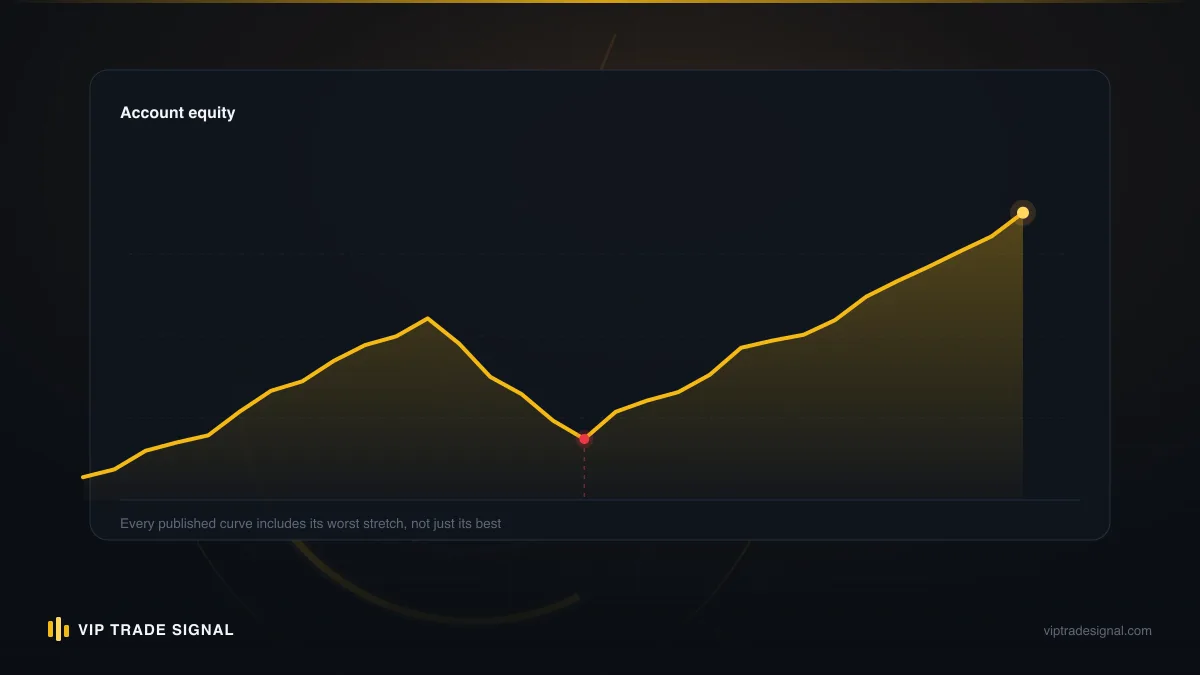
Notice what the table is really saying. The floating loss was operationally real at every single row. It gated what Sam could do at 3,334, long before any stop-out. The stop-out at the bottom isn't the moment the loss "became real". It's just the moment the last person in the room, Sam, was forced to agree with what the margin engine had been saying all along.
This is the mechanical answer to what is floating profit and loss in forex, by the way: it's the live input to the only equation your broker cares about. Equity divided by used margin. Everything else on the screen is decoration.
Two practical notes while we're in the plumbing. First, know your broker's actual margin call and stop-out levels; they vary, commonly 100%/50% or 60%/30%, and the difference decides how much warning you get. It's in the account specs, and if you can't find it, ask support before you need the answer, not after. Second, stop-outs fire on the live tick, including through weekend gaps. If your floating loss has your margin level at 70% on Friday evening, a hostile Monday open can take you straight past the stop-out with no intermediate prices at all. Sunday-night gap risk on gold is not a theoretical concern. We've watched it end accounts.
The "it's only a paper loss" fallacy
The phrase comes from long-term equity investing, and in that context it has some legitimacy. If you own shares of a solid company on a cash account, no leverage, no margin, no expiry, a 20% drawdown genuinely can be something you ride out for years. The investor's "paper loss" framing assumes three things: no forced liquidation, no financing drag worth mentioning, and an asset with a plausible claim to long-run positive drift.
Leveraged forex and gold trading violates all three. There is forced liquidation, and you've just seen the maths of exactly when. There is financing drag, every night. And a currency pair or a leveraged gold position has no dividend, no earnings growth, no structural reason to come back to your entry inside your survivable window. Gold went roughly a decade, 2011 to 2020, before reclaiming its 2011 high. Anyone leveraged long at the top didn't get to wait; the market has no obligation to return to your price while your margin holds out.
So when a trader says "it's only a paper loss", ask which part of the paper-loss framework actually applies to their situation. Almost always, none of it does. What they're really doing is borrowing the vocabulary of patient, unleveraged investing to describe a leveraged position that's bleeding swap and pinning their margin. That's not patience. It's a category error with a countdown timer.
A floating loss is only "paper" if nobody can force you to sell and nothing charges you rent while you wait. In leveraged trading, both are false.
There's also a psychological mechanism underneath the fallacy worth naming, because knowing its name helps. Behavioural economists call it the disposition effect: the well-documented tendency to sell winners too early and hold losers too long, because realizing a loss forces you to admit the original decision was wrong, and an open loss lets you defer the admission indefinitely. The floating loss isn't just a number you're managing. It's an admission you're avoiding. Once you see that clearly, the question "should I close this paper loss position" reveals itself as two questions tangled together, one about the market and one about your ego, and they need answering separately.
The market question is answerable with a framework. Let's build one.
Triage: small, serious, and critical floating losses
Not every floating loss deserves the same response, and pretending otherwise is how people end up either panic-closing every dip or white-knuckling every disaster. When an account lands on our desk, the first thing we do is triage, and the triage runs on two axes: how big is the floating loss relative to the account, and what is it doing to the margin level. Size tells you how much it hurts. Margin impact tells you how much time you have.
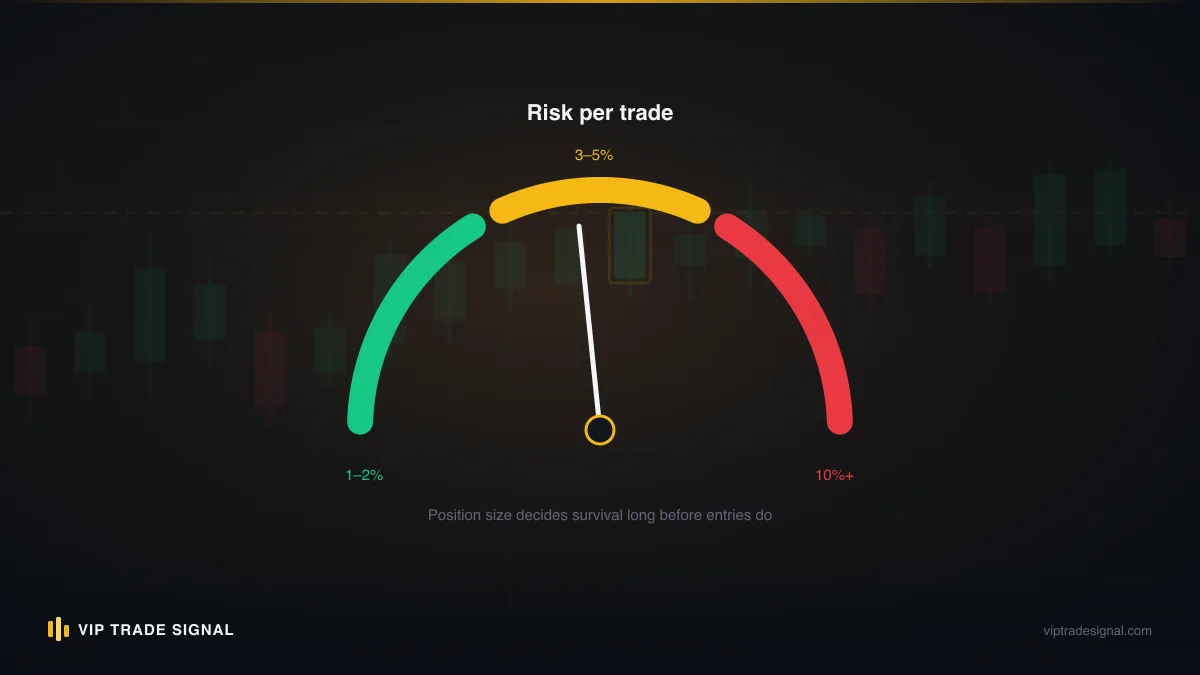
Here's the rough grid we work from. Your percentages may shift with your strategy, but the categories hold.
| Category | Floating loss vs equity | Typical margin level | What it usually means |
|---|---|---|---|
| Small | Under ~5% | Comfortably above 300% | Normal trade noise. A stop-loss question, not a crisis. |
| Serious | ~5-15% | 150-300% | The position is oversized or the thesis is aging. Decide deliberately, this week. |
| Critical | Over ~15-20% | Under 150%, falling | The account is now hostage to one idea. Structural intervention, not hope. |
A small floating loss is the cost of doing business. If you risked 1% on a planned setup with a stop, and the trade is down 0.7%, there is nothing to manage. The stop manages it. The only mistake available to you here is interfering: closing early out of twitchiness, or worse, removing the stop because the loss "feels" wrong. A $2,000 account down $15 on a planned trade has a functioning process. Leave it alone.
A serious floating loss is where discipline is actually tested, because it almost always means one of two upstream failures. Either the position was too big for the account, or there was never a hard stop and the loss quietly grew past where a sane stop would have been. At 10% of equity floating against you, you can still act from strength: margin is intact, options are open, nothing is forced. This is the window in which good decisions are cheap. It's also, infuriatingly, the window in which most traders decide to "give it a bit more room", because 10% down doesn't feel like an emergency yet. It isn't. It's the last exit before the emergency.
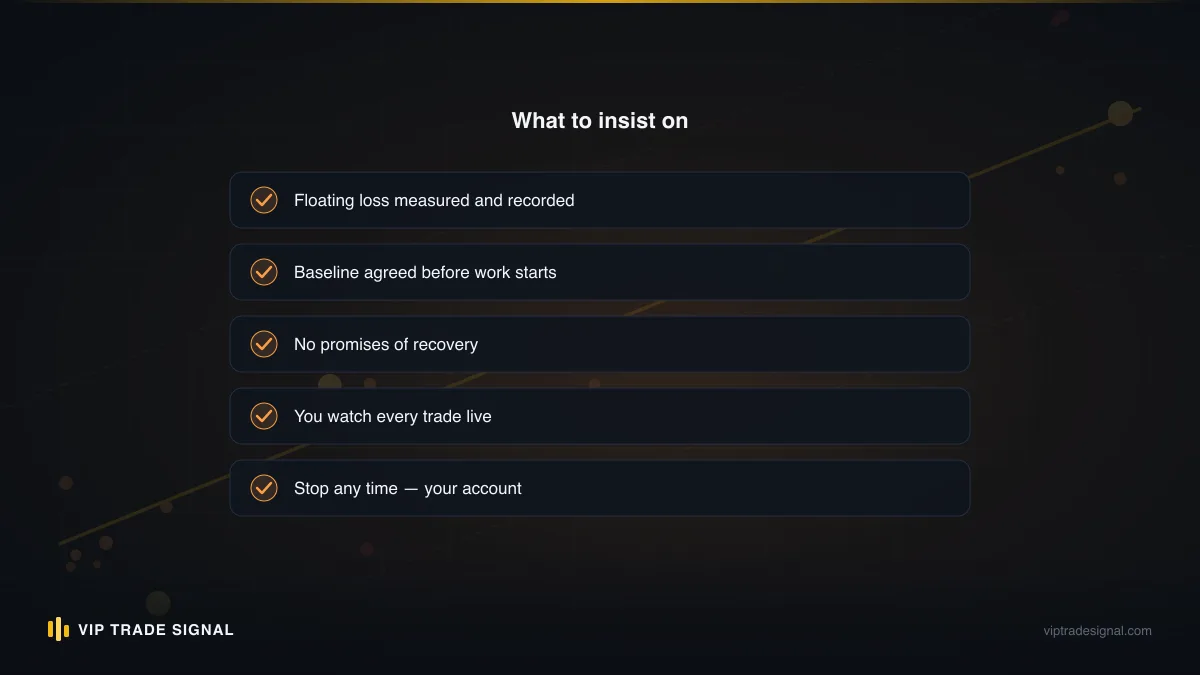
A critical floating loss is a different animal entirely, and the honest thing to say is that most of the standard advice stops working here. "Just cut it" ignores that realizing a 40% hit has real, permanent consequences for a real account that may have taken years to fund. "Just hold" ignores the stop-out maths we walked through above. Accounts in this zone need position-level surgery, partial closes, exposure restructuring, sometimes weeks of careful reduction, and they need it done by someone whose pulse isn't wired to the P/L. This is precisely the situation our drawdown management service exists for: accounts floating roughly $5k to $10k down, worked on a flat 50% of whatever gets recovered above a baseline we record together, with no recovery guarantee, because nobody honest can offer one.
Run the triage before you touch anything. Seriously, before. The single most common sequencing error we see is traders acting first (usually averaging down) and assessing afterwards, by which point the category has jumped a level and the good options have expired.
When holding a floating loss is defensible
Nothing above means every red position must be executed at dawn. Sometimes holding is right. But "sometimes" has conditions, and they're stricter than most traders want them to be. All four, not any one.
The original thesis is intact. Not "price might come back", which is always technically true and therefore means nothing. The specific reason you entered still stands. You bought gold at 3,320 because it held a level on the fourth test with a clear structure behind it; price is at 3,309 but the level hasn't broken. That's a thesis under normal stress. If the level breaks, the thesis is dead, and holding past a dead thesis isn't a trade anymore. It's a séance.
The position was sized for this. If you risked 1% and you're down 0.8%, the drawdown is inside the plan and the plan gets to finish. If you risked "however much felt right" and you're down 12%, there is no plan for the drawdown to be inside. You can't retroactively grant yourself the right to hold by inventing a thesis after the loss arrived.
A hard stop still exists. An invalidation price, entered in the platform, not held "mentally". A mental stop on a losing position has the approximate life expectancy of a New Year's resolution. If you find yourself moving the stop away from price, that's not managing the trade. That's negotiating with it, and you already know who wins those.
The margin maths survives the worst case. If price runs to your stop, does the account remain fully functional, margin level comfortable, other positions unaffected? If a normal adverse move puts you inside margin-call territory, the hold is not defensible regardless of how pretty the thesis is, because you've made your broker's risk engine a counterparty to your idea. It votes last, and it always wins.
Pass all four and holding is a decision. Fail any one and holding is a hope. There's a version of this logic in how we run subscriber trades too: every signal we publish carries a stop at entry, and every closed one, the losers very much included, sits in the public history, because a loss taken at a planned stop is a functioning system doing its job. It's the unplanned ones that end accounts.
When holding is denial
Now the other list. These are the tells we look for when someone sends us an account statement and asks whether their floating loss is salvageable. Any one of them is a flag. Two or more and the position is almost certainly being held by ego, not analysis.
- The thesis has migrated. The trade was entered as a two-day technical bounce. Three weeks later it's being defended with central-bank policy and quarterly charts. When the timeframe of the justification keeps growing to accommodate the loss, the original trade died long ago and something else is wearing its skin.
- The stop has been moved, or removed. Once is a warning. Twice is a pattern. Each move says the same thing: I will not accept the loss at any price, and the market is delighted to test exactly how far that extends.
- You've averaged down more than once. Adding at a better price can, rarely, be a planned strategy. Adding a second and third time to a position already deep underwater is not strategy, it's doubling the bet to avoid admitting the first one lost, and it's the single fastest route from serious to critical we know. The maths is vicious: each add drops your break-even a little and raises your exposure a lot, so the bounce you need gets smaller while the move that ruins you gets smaller too.
- You've stopped taking other trades. Not because there are no setups, but because free margin is thin and every spare thought is chained to the red position. One trade has become the account.
- You check the position at 2 a.m. Sleep is data. A position sized and structured correctly does not follow you to bed. If it does, some part of you already knows the exposure is wrong and is waiting for the rest of you to catch up.
- You're hiding it. From a partner, from a trading group, from yourself via creative statement-reading. Concealment is the surest tell of the lot. Defensible positions get discussed. Denial gets hidden.
Read that list coldly and notice something: not one item mentions price. That's the point. Whether holding is denial is almost never a question about the chart. It's a question about behaviour around the chart. The market doesn't know your entry price, doesn't know your break-even, doesn't know how much this position needs to come back. Every justification built on those numbers is a conversation you're having with yourself.
And if reading it produced a specific, uncomfortable flicker of recognition, that flicker is worth more than any indicator you own. Act on it while the loss is still in the serious column.
How to manage a large floating loss without panic closing
Suppose the triage says serious-to-critical, the denial checklist stung, and you're now resolved to deal with the thing. The next trap is the opposite one: the purge. Trader stares at the loss for six weeks, finally snaps, dumps the entire position at market in one disgusted click, usually within a whisker of a local extreme, then feels so scalded that they either quit or revenge-trade the balance away. Panic closing is denial's twin. Both are emotional responses wearing decision costumes.
Managing a large floating loss properly is slower and less cinematic. Here's the sequence we actually use.
First, stop the bleeding at the edges. Before touching the main position, kill everything making the situation worse: pending orders that would add exposure, correlated positions leaning the same way, and any impulse to "trade around" the loser with fresh risk. Stabilize the account so the problem stops growing while you think.
Second, do the accounting honestly. Write down, on actual paper if that's what it takes: current equity, floating loss in money and as a percentage, margin level now, the price at which margin call triggers, the price at which stop-out triggers, and total swap paid to date. Most traders in a deep floating loss have never once computed their stop-out price. The number is nearly always closer than they assumed, and seeing it in writing changes the conversation from "will it come back" to "will it come back before this specific price prints", which is the actual question.
Third, reduce in stages, on a schedule, not on feelings. The all-or-nothing frame, hold everything or close everything, is a false choice. If you're 2 lots down $6,000, closing half realizes $3,000 of the loss, roughly halves the margin pressure, halves the swap bleed, and buys back both breathing room and thinking room. Then set rules for the remainder in advance: a price level below which another portion goes, a bounce level at which another portion comes off into strength, a calendar date by which the position is flat regardless. Write the rules before the session opens. Follow them like a bored clerk. The entire value of the schedule is that it was made by the calm version of you and executed regardless of what the panicked version wants at the time.
Fourth, resist the break-even obsession. Traders escaping a deep floating loss anchor ferociously on their entry price, holding the last portion far too long because closing at -$400 after being -$6,000 somehow still counts as failure. It isn't failure. Getting out of a critical floating loss at a small realized loss is a rescue, full stop. Your entry price is not a magic number the market owes you a visit to. Recovering to 90% intact and trading on is a far better outcome than the round trip back to catastrophic that "waiting for break-even" so often buys.
Fifth, know when to hand it over. There is a level of entanglement past which you are the wrong person to manage your own position, not because you lack knowledge but because every close is an admission and every bounce is a temptation, and you're paying the hope tax on both. That's not a character flaw, it's just what unmanaged risk does to primates. If the account is floating thousands down and every attempt to run the schedule dissolves into "one more day", getting a professional between you and the close button is a legitimate move. It's exactly what our recovery work is, and we've written separately about how a structured account recovery actually runs if you want the mechanics before talking to anyone. The short version: jointly recorded baseline, staged de-risking, flat 50% of recovered profit above that baseline, you keep the master password and control of withdrawals throughout, and nobody promises you anything, because in this business the promise is the tell.
Trading leveraged gold is high-risk at every stage of this process, and some deep floating losses are not recoverable at acceptable risk. Anyone who tells you otherwise, including anyone claiming a recovery percentage, is selling comfort, not competence.
How floating losses become locked hedges
There's one more escalation path that deserves its own section, because it's sold as a fix and it's usually a trap.
At some point, a trader with a heavy floating loss discovers hedging. Rather than close the losing long, they open an equal short on the same instrument. The floating loss stops moving. Equity freezes. The bleeding, apparently, stops. And on the surface it feels like the cleverest move on the platform: you've bought time without admitting the loss.
What you've actually done is lock the loss in place while continuing to pay rent on it. The locked pair does nothing but cost: swap on both legs on most account types, spread already paid twice, margin still committed on many brokers. Worse, you've converted one hard decision, close or hold, into two harder ones, because now you must decide when to remove each leg, and every unhedging decision is a fresh directional trade with all the original risk plus the accumulated psychological baggage. Lift the short too early and the down-move resumes against your long. Lift the long and you've just realized the loss anyway, with extra steps and extra costs.
We've inherited accounts carrying locked gold hedges that were months old. Months. Two opposing positions, faithfully paying swap in both directions, guarding a loss that had been functionally realized the day the hedge went on. The owner had achieved the worst of every world: the loss was fixed, the costs were running, and the capital was imprisoned. In nearly every case, the kindest first surgery is unwinding the lock, carefully and in stages, because until it's gone the account can't actually do anything.
Is hedging ever legitimate? Briefly, yes: a deliberate, short-dated hedge through a known event, a central-bank decision, a payrolls print, placed with a plan for its removal written in advance, can be a reasonable tool. The distinction is the exit plan. A hedge with a scheduled removal is a tool. A hedge placed to avoid looking at a loss, with no removal plan, is just the paper-loss fallacy wearing a second position, and it should be treated with exactly the same suspicion.
If you're currently sitting inside a locked hedge and can't see the way out, that's a conversation worth having with someone before you touch either leg; unwinding order matters more than people expect, and it's the kind of question we field through our contact desk fairly often.
A decision checklist you can run tonight
Everything above compresses into a sequence you can run this evening on any open red position. Take the account statement, take twenty undisturbed minutes, and answer in order. Write the answers down; the writing is half the medicine.
- Compute the real numbers. Floating loss in money and as a % of equity. Current margin level. The exact price at which margin call triggers and the exact price at which stop-out triggers. Swap paid so far. No estimating. If you can't find your broker's stop-out level, that's tonight's first job.
- Categorize it. Small, serious, or critical, using the grid above. Be honest about which side of a boundary you're on. If you're arguing yourself into the milder category, you're in the worse one.
- State the original thesis in one sentence, from memory, then check it. If you can't state it, there wasn't one, and the position fails the hold test immediately. If you can, ask whether the specific invalidation has printed. Not "could it recover", but "is the reason I entered still alive".
- Run the denial checklist. Moved stops, repeated averaging, migrated timeframes, 2 a.m. checks, hiding it. Count the flags. Two or more overrides whatever the thesis check said.
- Decide the structure, not just the direction. "Hold" requires all four defensibility conditions and a hard stop in the platform tonight. "Cut" can mean staged reduction on written rules rather than one purge click. "Restructure" means partial close now to restore margin headroom, then a schedule for the rest.
- Set the tripwires in writing. The price at which more comes off. The bounce level at which you reduce into strength. The calendar date by which the position is flat no matter what. Dated, written, and placed where the panicked version of you will see them.
- Decide who executes. If your honest answer to "will I actually follow this tomorrow?" is anything but yes, the plan needs an enforcer who isn't you. That might be a trusted trading partner, or it might be professional help, and the difference in cost between asking early and asking late is usually measured in thousands.
Run it once and you'll know more about your position than weeks of chart-staring has told you, because the checklist asks the questions the chart can't: questions about size, margin, behaviour, and time.
Where this leaves you
The floating loss on your screen is not a prediction, not a punishment, and very much not a piece of paper. It is your equity, measured now, priced by people who don't know you exist. The kindest thing we can tell you, after years around accounts that learned it too late, is to believe the number. Not obey it in a panic. Believe it, and act on it while acting is still cheap.
Most floating losses, met early, resolve into something boring: a planned stop doing its job, a staged reduction, a small realized dent and a lesson about sizing. The disasters are almost never about one bad entry. They're about the six weeks after it, the moved stops, the averaging, the hedge, the hope. Every one of those weeks was an exit that got walked past.
If your account is past the point where a checklist fixes it, floating thousands down with margin tightening, that's the specific territory our drawdown management desk works in, and the structure is deliberately simple: we work your account toward recovery, take a flat 50% of whatever is actually recovered above a baseline we record together, and take nothing if nothing is recovered. Our fee sits at the high end of the industry precisely because there's no upfront charge and the minimums are low; we've laid out the reasoning in our piece on how profit-split account management pricing works, and the answers to the questions everyone asks first are on the FAQ. No guarantees come with any of it. Anyone offering you guarantees for a drowning account is fishing, not lifeguarding.
But most of you reading this aren't there yet. You're at -$900, or -$2,400, telling yourself it's paper. So here's the hard question to end on, and we'd genuinely urge you to answer it out loud: if you were flat right now, with your current equity in cash, would you open this exact position, at this size, at today's price?
If yes, you have a trade. Manage it like one, stop and all.
If no, you don't have a trade. You have a floating loss with a story attached, and the market charges rent on stories every single night it stays open.